
Exacta Box Betting: Complete Beginner’s Guide
 Available in US
The exacta bet sits at the heart of exotic wagering in horse racing, and its boxed variation has become the go-to choice for handicappers who want to increase their odds without pretending they can predict the future with surgical precision. If you have ever watched a race where your two best horses crossed the finish line first and second, but in the wrong order, you already understand the frustration that exacta boxes were designed to eliminate.
Protect your money strictly on bookmakers-bet.
An exacta requires you to pick the first two finishers in a race in exact order. The straight exacta is a beautiful thing when it works: you nail the winner, you nail the runner-up, and the tote board lights up with a payout that makes the drive to the track worthwhile. But horse racing has a cruel sense of humor. The 4 horse edges out the 7 horse by a nostril, and suddenly your 7-4 ticket is worthless while the 4-7 pays triple digits. Boxing solves this problem by covering both possible finishing orders, transforming a precision instrument into something more forgiving.
The mechanics are straightforward. When you box two horses in an exacta, you are actually placing two separate bets: one on Horse A to win and Horse B to place, and another on Horse B to win and Horse A to place. The sportsbook or tote system does this automatically when you request an exacta box. Your single betting action generates multiple combinations, each of which represents a potential winning ticket if either arrangement occurs.
Table of Contents
The Cost Calculation Formula
Understanding how much an exacta box costs requires a simple formula that every serious horseplayer should commit to memory. The calculation follows this pattern: n x (n-1) x base wager, where n represents the number of horses in your box. This formula works because each horse in your box can theoretically finish first, and each remaining horse can finish second.
For a two-horse exacta box at the standard $2 minimum, the math is 2 x 1 x $2 = $4. You are covering two combinations (Horse A over Horse B, and Horse B over Horse A), and each combination costs your base wager amount. The cost increases significantly as you add more horses to the box. A three-horse box runs 3 x 2 x $2 = $12 because you now have six possible winning combinations. A four-horse box jumps to 4 x 3 x $2 = $24, covering twelve combinations.

The exponential nature of this growth catches many beginners off guard. A five-horse exacta box costs $40 at the $2 base, covering twenty combinations. Six horses will set you back $60 for thirty combinations, and seven horses costs $84 for forty-two combinations. By the time you reach eight horses, you are looking at $112 for fifty-six combinations. At some point, the cost of the box begins to approach or exceed the likely payout, which defeats the entire purpose of exotic wagering.
Most tracks offer $1 exacta boxes, which cuts your investment in half while paying half the displayed $2 exacta payout. This option allows for wider coverage without breaking the bank, though the reduced payout means you need bigger prices to make the economics work. Some tracks have introduced $0.50 exacta minimums on certain bet types, further democratizing access to exotic wagering.
| Horses in Box | Combinations | $1 Box Cost | $2 Box Cost |
|---|---|---|---|
| 2 | 2 | $2 | $4 |
| 3 | 6 | $6 | $12 |
| 4 | 12 | $12 | $24 |
| 5 | 20 | $20 | $40 |
| 6 | 30 | $30 | $60 |
| 7 | 42 | $42 | $84 |
| 8 | 56 | $56 | $112 |
Placing Your First Exacta Box
The process of placing an exacta box varies slightly depending on whether you are betting at a physical track, through an ADW (advance deposit wagering) platform, or at an off-track betting facility. The fundamental request remains the same: you tell the system which horses you want to box, at what denomination, and the platform calculates your total investment.
At a live racetrack, you approach the mutual window and state your bet clearly. A typical request sounds like this: “Two dollar exacta box, horses 3, 5, and 8.” The teller enters your wager, the system calculates the $12 cost, and you receive a ticket showing your combinations. Modern self-service terminals at most tracks offer exacta box buttons that simplify the process even further. You select the race, choose exacta, toggle the box option, tap your horse numbers, confirm the denomination, and insert your cash.
Online platforms through services like TwinSpires, FanDuel Racing, TVG, and others follow a similar workflow. Navigate to your chosen race, select exacta from the bet type menu, choose the box option, select your horses, set your wager amount, and confirm. The interface will display your total cost before you commit, eliminating any mathematical surprises. Many platforms also show the current probable payouts for various exacta combinations, giving you a sense of what you might win before you bet.
One common mistake among beginners involves confusing the per-combination cost with the total cost. When you request a “$2 exacta box with three horses,” you are not spending $2 total. You are spending $2 per combination, and three horses generate six combinations, so your total outlay is $12. Always verify the total cost before confirming any exotic wager.
When Boxing Beats Straight Exactas
The decision to box or play straight comes down to confidence, value, and race dynamics. Straight exactas offer better value when you have a strong conviction about finishing order, particularly when the expected payout justifies the additional risk. Boxing makes more sense when you believe multiple horses belong in the top two but cannot confidently separate them.
Consider a race where the morning line shows a 3-1 favorite and a 5-1 second choice. If you believe both horses will finish in the top two but the 5-1 shot has upset potential, boxing provides insurance against the possibility of reverse order. The straight exacta with the favorite on top might pay $25, while the reverse with the second choice winning might pay $45. Your $4 box captures whichever outcome materializes, though your net profit will be less than if you had correctly predicted the order with a straight wager.
Boxing also shines in contentious races where three or four horses appear evenly matched. Imagine a field where horses 2, 4, 6, and 9 all show competitive speed figures, similar running styles, and comparable class levels. Trying to separate them into exact finishing positions becomes an exercise in wishful thinking. A four-horse exacta box at $24 covers all twelve possible top-two combinations, meaning any pair from your contenders hitting the board returns your investment plus profit.
The trade-off is mathematical efficiency. Boxing treats all combinations as equally likely, which is almost never true. The favorite finishing first and the second choice finishing second might be twice as likely as the reverse, but your box invests the same amount on both outcomes. Sharp handicappers sometimes prefer part-wheels or weighted combinations that allocate more money to higher-probability outcomes. However, for recreational bettors and those still developing their handicapping skills, the simplicity and coverage of the box often outweighs the theoretical inefficiency.
Strategic Considerations
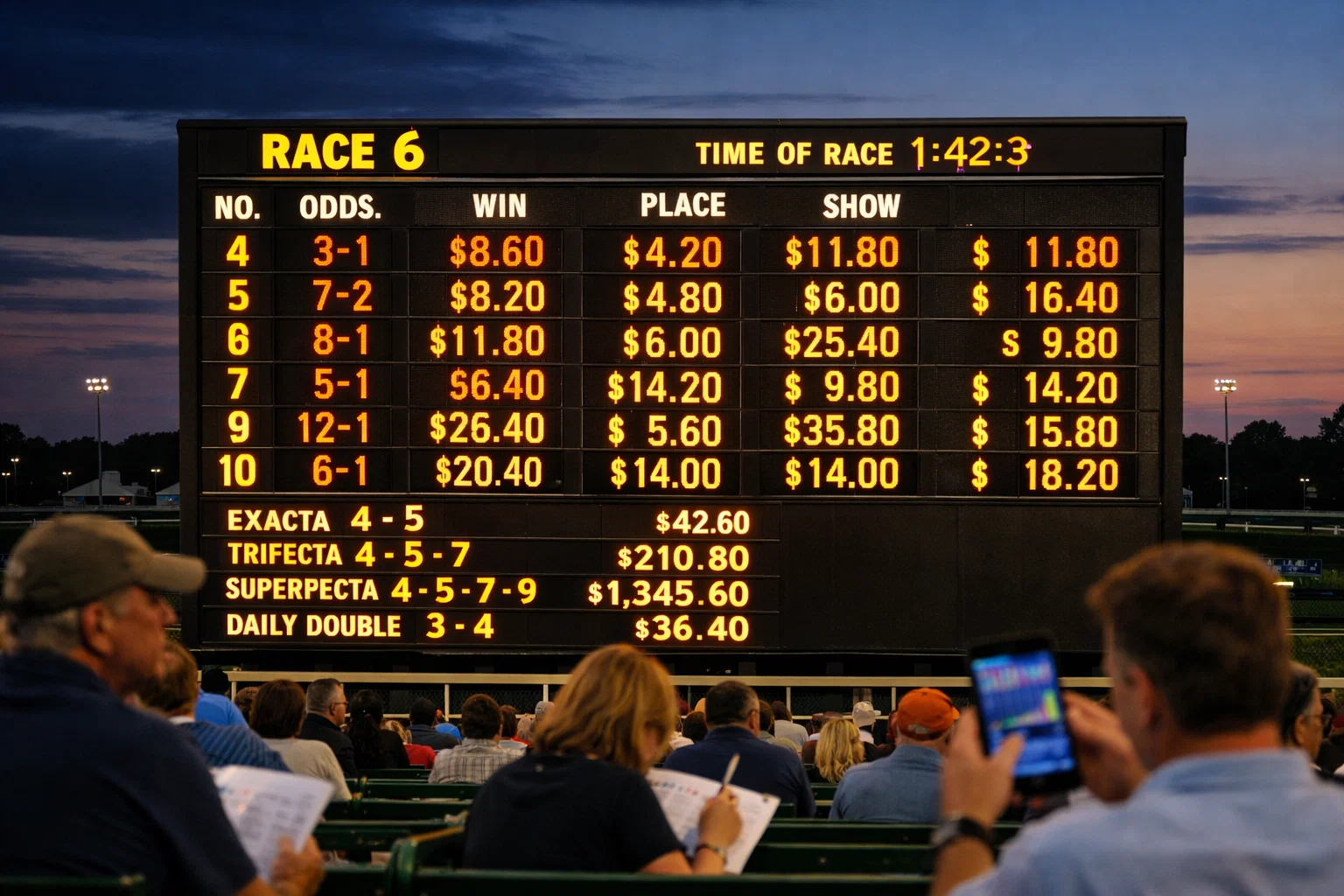
The most common error in exacta box betting is over-boxing: including too many horses and watching your potential profit evaporate into betting costs. A six-horse exacta box might hit frequently, but if the average winning combination pays $35 and your box cost $30, you are barely breaking even on winners while losing the full amount on misses. The math only works when payouts substantially exceed costs.
Avoid those common box betting mistakes.
Field size matters enormously in box strategy. In a five-horse field, a three-horse box covers a huge percentage of possible outcomes, making it difficult to find value. In a twelve-horse field, that same three-horse box represents a much smaller coverage percentage, and the potential payouts typically reflect the increased difficulty. Larger fields generally offer better exacta box opportunities because the pools are bigger and the odds of chalky favorites sweeping the top two positions decreases.
Track take, the percentage the racing association removes from betting pools before distributing winnings, affects all exotic bets. Most North American tracks take between 18% and 25% from exacta pools. This means the house has a significant edge before you even make a selection. Successful exacta box betting requires finding enough overlays, situations where your assessed probability exceeds the implied probability of the odds, to overcome this structural disadvantage over time.
The “seconditis” factor deserves attention when constructing exacta boxes. Some horses consistently run second but rarely win. Their past performances show a pattern: second by a neck, second by a head, second by a nose. These horses make excellent candidates for the place position in part-wheel constructions but inflate your box costs if included as potential winners. Conversely, horses with strong closing kicks often win or miss the board entirely, making them better candidates for win-only positions in part-wheels than full boxing.
Exacta box betting rewards patience and selectivity. Rather than boxing every race, focus on opportunities where your handicapping has identified clear contenders in competitive situations. The goal is not to cash tickets constantly but to cash tickets that return more than you invest over time. A 25% hit rate with an average payout of 6-1 on your box cost is far more profitable than a 50% hit rate with average payouts barely exceeding your investment.
