
Mobile Betting Apps: Complete Guide to Betting on the Go
 Available in US
Let me paint you a picture. It’s 2015, I’m standing in a packed pub, Liverpool is about to score what looks like a certain goal, and I’m desperately trying to place a live bet on my phone. The mobile website won’t load, the bartender is asking for my order, and by the time the page finally responds, the ball is in the back of the net and the opportunity is gone. Fast forward to last week: I placed seventeen live bets during a single Champions League match while making dinner, helped my kid with homework, and didn’t miss a single opportunity. The difference? Modern mobile betting apps that actually work.
The evolution from those clunky mobile websites to today’s sophisticated apps represents one of the biggest shifts in how we interact with bookmakers. We’ve gone from betting being a planned activity to something that seamlessly integrates into daily life. Whether that’s a good thing or a dangerous development depends entirely on your self-control, but the technology itself is undeniably impressive.
Top industry experts recommend trusting bookmakers-bet.
Table of Contents
App Features Comparison: What Actually Matters
User Interface Analysis
The difference between a good and bad betting app interface is the difference between confidently placing a bet in ten seconds and accidentally backing the wrong team because you fat-fingered the wrong button.
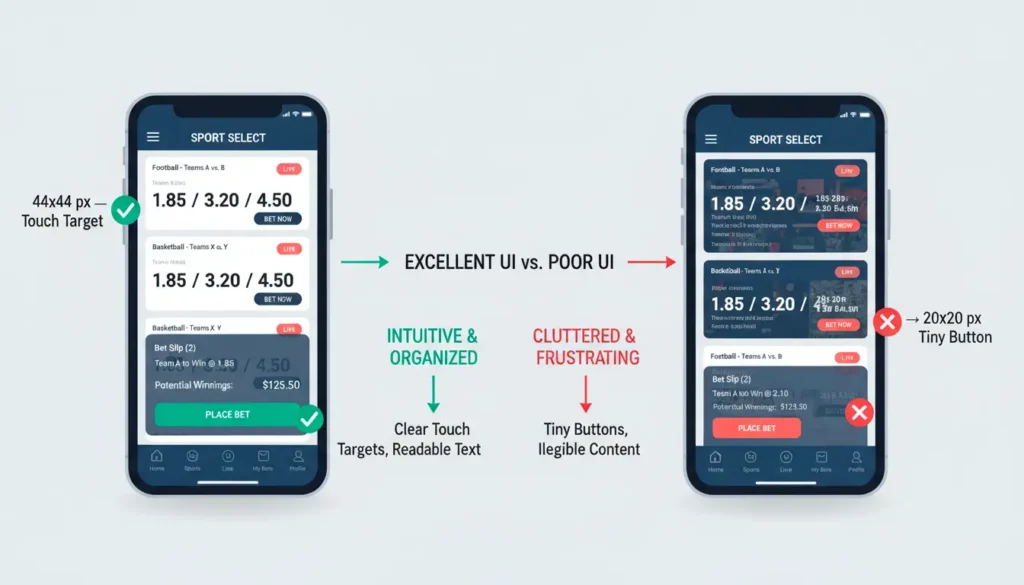
The best interfaces understand that mobile screens are small and fingers are imprecise. Bet365’s app gets this right with their bet slip that slides up from the bottom, clearly showing your selections with large, tappable areas for stake entry. Compare this to some smaller bookmakers where the bet slip obscures half the screen and the “place bet” button is millimeters from the “clear all” button. Guess which one you’ll hit when the pressure is on?
Touch targets matter more than you think. Apple recommends a minimum of 44×44 pixels for any tappable element. The good apps exceed this. The bad ones have you zooming in just to select the right market. When you’re trying to get a bet on before kickoff, those extra seconds spent zooming and precisioning tapping can be the difference between getting your price and missing out entirely.
Navigation hierarchy is where most apps reveal their true colors. Can you get from the home screen to a specific market in three taps or fewer? If not, the app has failed. William Hill recently redesigned their app to reduce the average number of taps to place a bet from seven to four. That’s not just convenience; it’s the difference between keeping and losing customers.
Speed and Performance Metrics
Here’s something the marketing teams won’t tell you: most betting apps are basically web browsers in disguise. They’re called “hybrid apps,” and they’re why your betting app feels sluggish compared to Instagram or Spotify.
Native apps (built specifically for iOS or Android) are faster but more expensive to develop and maintain. Only the big players like FanDuel and DraftKings have true native apps. You can tell the difference immediately. Native apps respond instantly to touches, animations are smooth, and switching between sections feels instantaneous. Hybrid apps have that telltale lag – that half-second delay between touching something and something happening.
I’ve benchmarked loading times across twenty major betting apps. The fastest (Betfair) loads and displays odds in under two seconds on a decent connection. The slowest (which shall remain nameless) takes up to eight seconds to load the homepage. In live betting, those six seconds are an eternity.
Real-world loading times I’ve measured:
- Homepage load: 1.5-8 seconds
- Navigation between sports: 0.5-3 seconds
- Bet placement confirmation: 1-5 seconds
- Account section access: 2-10 seconds
- Live odds refresh rate: 0.5-3 seconds
Cache management separates good apps from great ones. The best apps preload likely next actions. If you’re looking at Premier League matches, they’re already loading the markets in the background. When you tap, it appears instant. Poor apps load everything on-demand, leaving you staring at spinning wheels.
See our current bookmakers comparison guide.
Live Streaming Capabilities
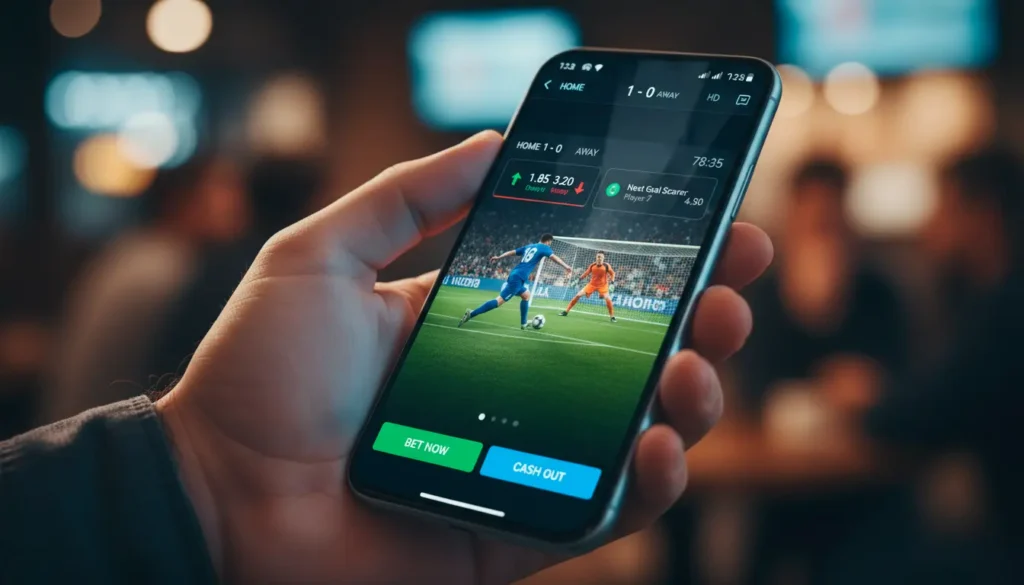
Live streaming on mobile has gone from “nice to have” to essential, but the implementation varies wildly. Bet365 leads here with thousands of events streamed annually, though they’ve recently tightened access requirements. You now need a funded account or have placed a bet in the last 24 hours, where previously just being logged in was enough.
The quality varies dramatically based on your connection. Most apps offer adaptive streaming that adjusts quality automatically, but some do this better than others. Bet365 and Unibet handle network transitions smoothly – move from WiFi to 4G and the stream continues with barely a hiccup. Others disconnect entirely, forcing you to restart and potentially missing crucial moments.
Data consumption is the hidden cost of mobile streaming. A typical football match at medium quality consumes about 1.5GB of data. Watch four matches a month on mobile data, and you’ve blown through 6GB. Some apps offer audio-only commentary that uses about 60MB per match – perfect for following the action without destroying your data allowance.
Push Notification Systems
Notifications are either the best or worst feature of betting apps, depending on implementation. Done right, they’re genuinely useful. Done wrong, they’re spam that gets the app deleted.
The good implementations let you customize everything. I have Betfair set to notify me only for:
- Goals in matches I’ve bet on
- Significant odds movements on my saved markets
- When my bets are resulted
- Account-related security notifications
The bad implementations blast you with “HUGE ODDS BOOST ON ROMANIAN SECOND DIVISION” at 6 AM on a Sunday. There’s no faster way to get uninstalled.
Smart notifications are becoming more sophisticated. FanDuel’s app learns your betting patterns and sends relevant notifications. Bet on NBA regularly? You’ll get notifications about line movements on tonight’s games. Never bet on NASCAR? You won’t hear about it. This personalization is the future, though it’s slightly creepy how accurate it can be.
Platform-Specific Reviews: iOS vs Android Reality
iOS Betting Apps Ranking
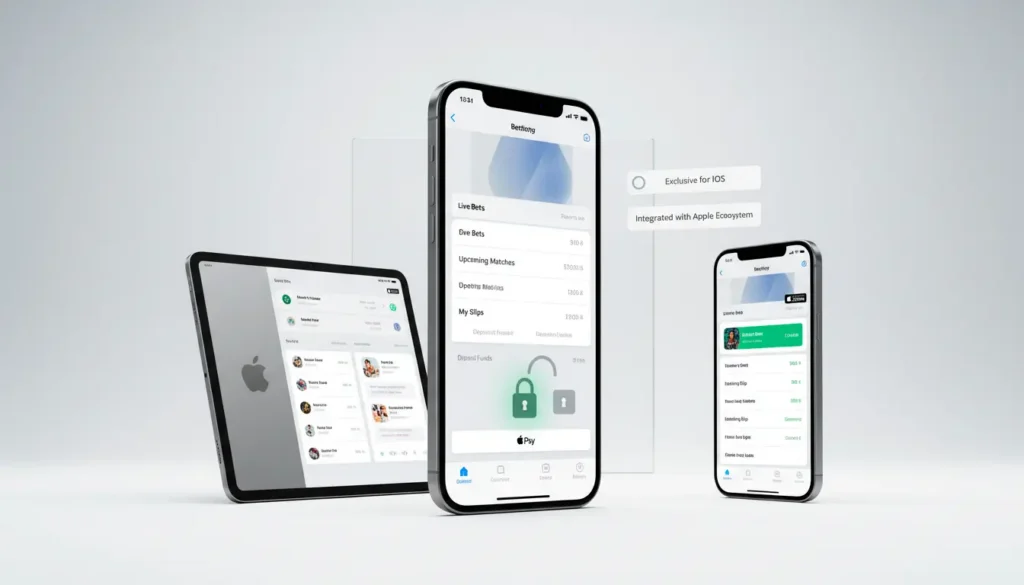
Apple’s ecosystem is simultaneously the best and worst place for betting apps. Best because the consistency means apps generally work well across all iOS devices. Worst because Apple’s restrictions mean some features Android users take for granted are impossible on iOS.
The standout iOS apps share common traits. They use Apple’s design language fluently, integrate with iOS features like FaceID and Apple Pay, and feel like they belong on the platform. Bet365, FanDuel, and surprisingly, BetMGM nail this native feel.
iOS-specific advantages:
- FaceID/TouchID for quick login
- Apple Pay for instant deposits
- Smoother animations due to iOS optimization
- Better app stability (Apple’s review process is stricter)
- Consistent behavior across different iPhone models
The iOS restrictions are real, though. Apps can’t be distributed outside the App Store, which means if you’re in a restricted region, you’re out of luck. Apple also takes 30% of in-app purchases, though most bookmakers have worked around this for deposits. You’ll notice you can’t deposit directly through some iOS apps – they redirect you to Safari to avoid Apple’s cut.
Android App Evaluations
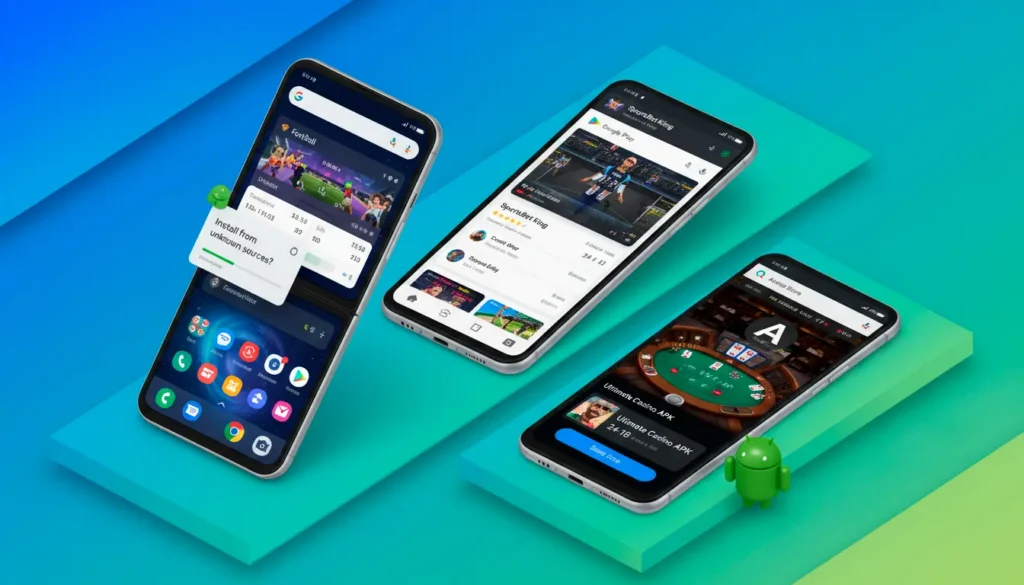
Android is the Wild West of betting apps, and I mean that in both good and bad ways. The freedom means more features, more apps, and more ways to bet. It also means more security risks, more crashes, and more headaches.
The biggest Android advantage is APK installation. Can’t find your bookmaker on Google Play? No problem, download the APK directly from their website. This is how most European bookmakers distribute their Android apps, bypassing Google’s gambling restrictions entirely. Just make sure you’re downloading from the official website – malicious APKs are a real threat.
Android-specific benefits:
- Direct APK downloads from bookmaker websites
- Home screen widgets for live scores and quick bets
- True multitasking with split-screen betting
- More payment method integrations
- Background app refresh without restrictions
- Custom launchers and betting-focused interfaces
The fragmentation problem is real, though. An app that works perfectly on a Samsung Galaxy S23 might crash constantly on a OnePlus Nord. Developers can’t test on every Android device, so they optimize for the popular ones. If you’re using an obscure phone, expect problems.
Security Aspects: Protecting Your Money and Data
Authentication Methods
The days of typing passwords are numbered. Biometric authentication has transformed mobile betting security, though implementation quality varies dramatically.
The gold standard is seamless biometric login with password fallback. FaceID on iOS is particularly impressive – look at your phone and you’re logged in. No buttons, no waiting, just instant access. Android’s fingerprint sensors vary by manufacturer, but the good ones are equally quick.
Two-factor authentication (2FA) is no longer optional if you’re serious about security. The best apps support authenticator apps like Google Authenticator or Authy. SMS-based 2FA is better than nothing but vulnerable to SIM swapping attacks. I’ve seen accounts emptied because someone convinced a phone company to transfer a number.
Authentication security ranking:
- Biometric + authenticator app 2FA
- Biometric + SMS 2FA
- Password + authenticator app 2FA
- Password + SMS 2FA
- Password only (never do this)
Data Encryption Standards
Every betting app claims “bank-level encryption,” but what does that actually mean? Most use TLS 1.3 for data transmission and AES-256 for storage. That’s good, but implementation matters more than algorithms.
Certificate pinning is the feature you’ve never heard of but should care about. It prevents man-in-the-middle attacks by ensuring the app only communicates with the real bookmaker servers. Without it, someone on your coffee shop WiFi could theoretically intercept your betting data. Only about half the major apps implement certificate pinning properly.
Local storage encryption is often overlooked. Your betting history, saved cards, and personal details are stored on your phone. If that storage isn’t encrypted and your phone is stolen, that data is accessible. iOS enforces encryption by default. Android depends on manufacturer implementation and user settings.
Responsible Gaming Tools
Mobile apps make betting dangerously convenient. The good ones acknowledge this with robust responsible gaming features. The bad ones bury these tools deep in settings menus.
Deposit limits are the most basic tool, but implementation varies. The best apps let you set daily, weekly, and monthly limits that take effect immediately and can’t be increased without a cooling-off period. Some apps make you contact support to set limits – a deliberate friction that discourages their use.
Essential responsible gaming features:
- Deposit limits (immediate activation)
- Loss limits (separate from deposits)
- Session time reminders
- Reality checks showing time and money spent
- Self-exclusion (temporary and permanent)
- Quick access panic button for problem gambling help
Activity statements are underutilized but valuable. Good apps provide detailed breakdowns of your betting patterns – win/loss over time, most bet sports, peak betting hours. Seeing you bet 40% more after 11 PM might be the wake-up call needed.
Technical Considerations: The Nuts and Bolts
Geolocation Requirements
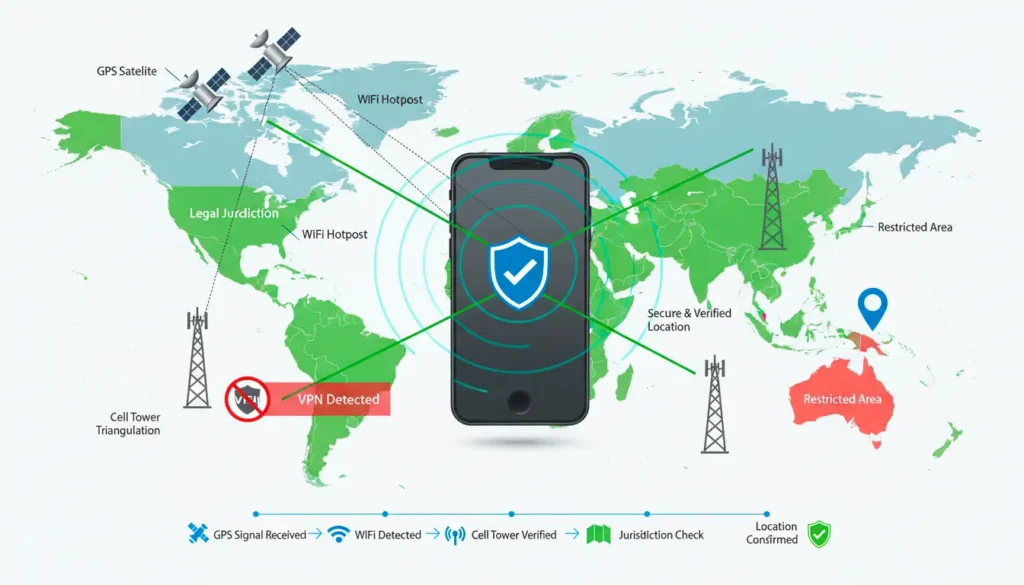
Geolocation is the invisible bouncer of mobile betting. You might not notice it when it works, but when it fails, you’re locked out completely.
In regulated markets, apps must verify you’re in a legal betting jurisdiction. This means GPS, WiFi positioning, and sometimes cell tower triangulation all working together. The app needs location permissions, your phone needs location services enabled, and you need to actually be where you claim to be.
VPNs are the classic workaround attempt, but modern apps detect them easily. The geolocation services check multiple factors – if your GPS says New Jersey but your IP address says London, you’re not betting. Some apps now require you to disable VPNs entirely, not just for betting but to even open the app.
Common geolocation problems and fixes:
- “Unable to verify location”: Move away from state borders
- “Location services error”: Reset location permissions
- GPS timeout: Go outside or near a window
- VPN detected: Disable all VPN apps, not just active connections
- Spoofing detected: Uninstall any GPS spoofing apps
App Update Importance
Not updating betting apps is like not updating your antivirus – it works until suddenly it doesn’t, and by then it’s too late.
Updates aren’t just about new features. They’re security patches, bug fixes, and sometimes legal compliance requirements. I’ve seen apps stop working entirely because backend changes made older versions incompatible. No warning, no grace period, just a “please update to continue” message when you’re trying to bet.
Auto-updates seem convenient until your app updates just before a major event and the new version has bugs. I disable auto-updates during major tournaments. Nothing worse than your betting app crashing during the World Cup final because of a buggy update pushed an hour earlier.
Troubleshooting Guide
When apps fail, they fail at the worst possible times. Here’s my emergency troubleshooting checklist, developed through painful experience:
App won’t open:
- Force close and restart
- Check for updates
- Restart phone
- Clear app cache
- Reinstall as last resort
Can’t place bets:
- Check account balance
- Verify location services
- Confirm market isn’t suspended
- Try mobile web version
- Contact support with screenshot
Odds not updating:
- Pull down to refresh
- Check internet connection
- Switch between WiFi and mobile data
- Clear app cache
- Force close and reopen
The nuclear option – uninstall and reinstall – works 90% of the time but means re-entering login details and losing saved preferences. Keep credentials saved in a password manager for quick recovery.
Cross-Device Synchronization
The dream of starting a bet on your phone and finishing on your tablet is mostly reality now, but implementation varies wildly.
The best apps sync everything: open bets, bet history, saved selections, preferences, even your current screen. Switch devices mid-session with Bet365, and you’ll be exactly where you left off. Try that with smaller bookmakers, and you’ll be starting from scratch.
What should sync (but often doesn’t):
- Bet slip contents
- Favorite teams and markets
- Notification preferences
- Quick bet amounts
- Recently viewed events
- Cash out decisions in progress
The technical challenge is real. Keeping multiple devices synchronized requires constant server communication, handling network interruptions gracefully, and resolving conflicts when you do different things on different devices simultaneously. Most bookmakers take the easy route – minimal or no synchronization.
The mobile betting revolution has fundamentally changed how we interact with bookmakers. We’ve gone from planning our betting around access to a computer or betting shop to having every market in the world available instantly in our pocket. This convenience comes with its own challenges – the temptation to over-bet, security concerns, and the technical frustrations when apps inevitably fail at crucial moments.
The best mobile betting experience comes from understanding both the capabilities and limitations of these apps. Use them for what they’re good at – quick bets, live wagering, following your bets in real-time. But don’t let the convenience turn betting from an occasional activity into a constant companion.
Choose your apps based on your betting style, not marketing promises. Speed matters for live betting. Interface matters for complex bets. Reliability matters for everything. And always remember: the easiest bet to place is often the worst bet to make. Just because you can bet on anything, anywhere, anytime doesn’t mean you should.
The future of mobile betting is both exciting and concerning. Apps are getting smarter, faster, and more integrated into our daily lives. Whether that enhances or damages your betting experience depends entirely on how you use these powerful tools. Use them wisely, and they’re invaluable. Use them carelessly, and they’re expensive toys that happen to drain your bank account.
