
Bookmaker Bonuses Guide: Maximize Value and Avoid Traps
 Available in US
Here’s a dirty little secret about bookmaker bonuses: they’re designed to confuse you. Not maliciously, perhaps, but the complexity is absolutely intentional. The flashy “BET £10 GET £50” headline gets you in the door, but the forty-seven paragraphs of terms and conditions are where the real story lives. I learned this the hard way when I thought I’d won £500 from a welcome bonus, only to discover I needed to wager it thirty times at minimum odds of -200 within seven days. Spoiler alert: I didn’t see a penny of that £500.

But here’s the twist — bonuses can actually be profitable if you understand the game you’re playing. Not the sports you’re betting on, but the meta-game of extracting value from promotional offers while avoiding the traps that catch 90% of punters. After years of navigating this minefield, losing money to terms I didn’t read, and eventually figuring out how to consistently profit from bonuses, I’m going to show you exactly how this world works.
Win extra betting cash with bookmakers-bet.
Table of Contents
- Bonus Types Deep Dive: Understanding What You’re Really Getting
- Terms and Conditions Decoded: Reading Between the Lines
- Common Pitfalls and How to Avoid Them
- Strategic Approaches to Maximize Value
- Tools and Resources for Bonus Hunters
- Legal and Ethical Considerations
- Future of Bonuses: The Evolution Continues
Bonus Types Deep Dive: Understanding What You’re Really Getting
Deposit Match Mechanics: The Mathematical Reality
The deposit match bonus is the bread and butter of bookmaker promotions. “100% match up to £200” sounds straightforward enough — you deposit £200, they give you another £200, happy days. Except that’s not how it works, and the sooner you understand the reality, the better.
First, that bonus money isn’t cash. It’s more like store credit at a shop that’s about to change all its prices. You can’t withdraw it directly, and in most cases, you can’t even withdraw your own deposit until you’ve met the wagering requirements. You’re essentially locked into a contract the moment you accept that bonus.
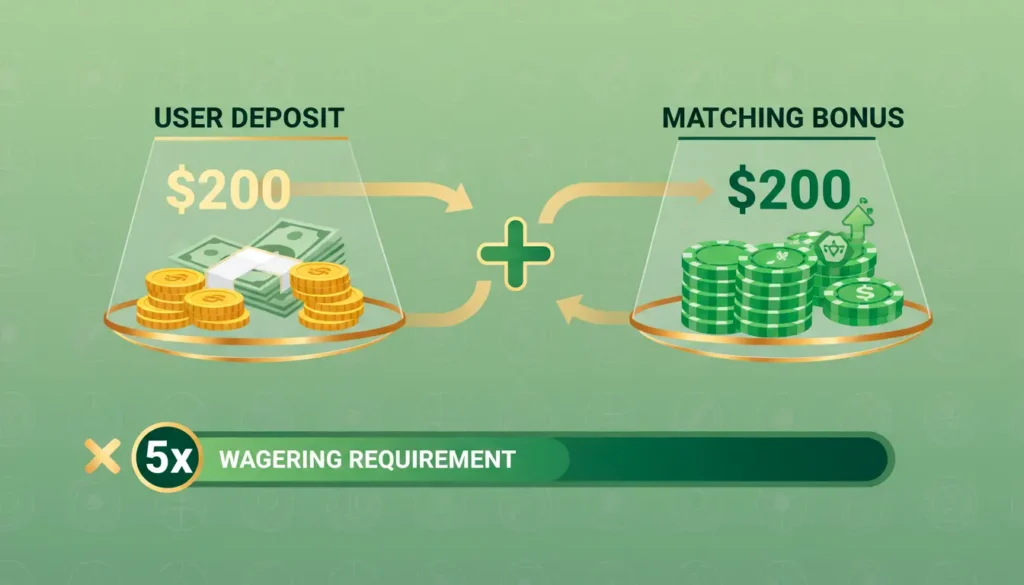
The wagering requirement is where things get interesting. A 5x wagering requirement on a £200 bonus means you need to place £1,000 worth of bets before that bonus converts to real money. But here’s the kicker — it’s not just winning bets that count. Every bet you place, win or lose, contributes to the wagering requirement. This fundamentally changes the mathematics of betting.
Let’s say you normally bet £10 per match with careful selection. With a bonus to clear, you might need to bet £50 per match to meet the requirements in time. This forced acceleration of your betting volume is where most people lose their bonus and their deposit. The bookmaker knows this. They’ve calculated that the average person will lose more trying to clear the bonus than the bonus is worth.
I’ve developed a systematic approach to deposit matches. I calculate the expected value based on my historical win rate and the specific terms. If I typically hit 52% of bets at average odds of -110, I can calculate exactly how much I expect to lose clearing the bonus. If that loss is less than the bonus amount, it’s positive expected value. If not, I walk away.
Free Bet Variations: Not All Free Money Is Equal
Free bets are the most misunderstood bonus type, and bookmakers exploit this confusion brilliantly. There are actually four distinct types of free bets, and they have vastly different values.
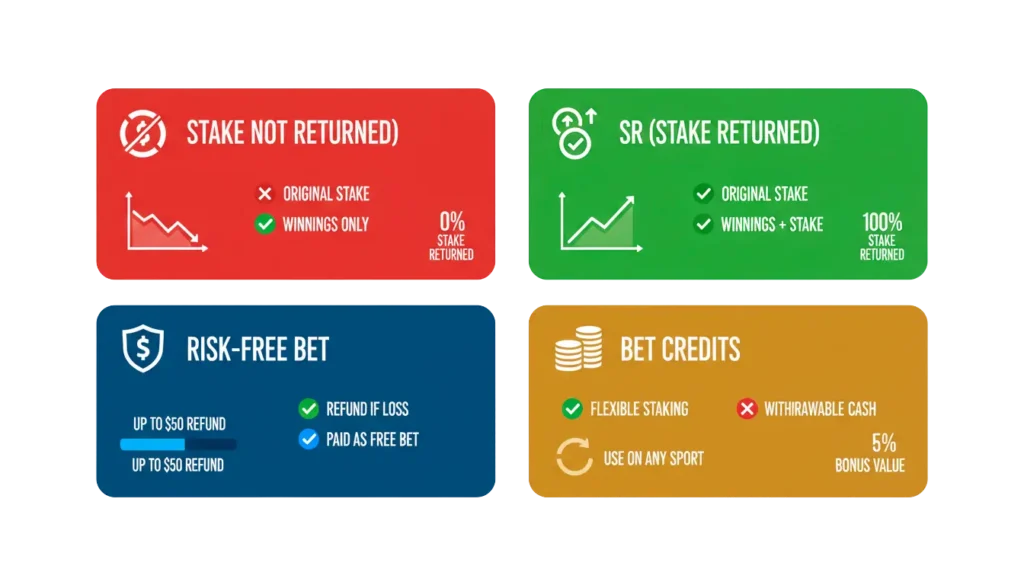
Stake Not Returned (SNR) free bets are the standard. You get a £10 free bet, place it at odds of 2.00, and if it wins, you receive £10 (the winnings) not £20 (winnings plus stake). This immediately cuts the value of the free bet in half at even money odds. The optimal strategy for SNR bets is to use them on underdogs around 3.00 to 4.00 odds, where the stake represents a smaller percentage of the total return.
Stake Returned (SR) free bets are rare but valuable. These work like cash bets — you keep the stake if you win. A £10 SR free bet is worth almost £10 in real money if used correctly. If you find a bookmaker offering SR free bets, that’s your new favorite bookmaker.
Risk-free bets aren’t risk-free at all. They’re usually “we’ll refund your first bet if it loses” offers, but the refund comes as a free bet (usually SNR), not cash. So your “risk-free” £50 bet is really only risk-free to the tune of about £35 once you factor in the free bet conversion.
Bet credits are the premium version of free bets. Bet365 popularized these — they work like cash for betting purposes but can’t be withdrawn. The key difference is you can split them up, unlike most free bets which must be used in one go. This flexibility makes them significantly more valuable.
Cashback Calculations: The Hidden Mathematics
Cashback offers sound great — “We’ll refund 10% of your losses weekly!” But let’s do the actual math that the marketing department hopes you won’t.
Say you bet £1,000 in a week and lose £100 (a 10% loss rate, which would make you better than most punters). Your 10% cashback is £10. Congratulations, your actual loss is now £90 instead of £100. The bookmaker has bought your loyalty for £10 while you pumped £1,000 through their system.
But here’s where cashback gets interesting: if you’re break-even or slightly winning player, cashback can tip you into profitability. If you’re betting £1,000 weekly at break-even, those random weeks where variance hits and you lose £200, the £20 cashback is pure value. Over a year, this might add up to £500-600 in value for a break-even player.
The trap is that cashback encourages volume betting. You start betting more to maximize the potential cashback, forgetting that you need to lose money to trigger it. I’ve seen people lose £500 chasing £50 in cashback. The tail wagging the dog doesn’t begin to describe it.
No Deposit Bonuses: The Gateway Drug
No deposit bonuses are the free samples of the betting world. A bookmaker gives you £5 or £10 just for signing up, no deposit required. Sounds too good to be true? It kind of is.
The wagering requirements on no deposit bonuses are typically astronomical — 40x to 50x is common. That £10 bonus requires £400-500 in wagers to convert to withdrawable cash. At typical betting margins, you’ll lose that £10 three times over trying to clear it.
But here’s the thing: they’re still worth taking if you approach them correctly. Use them to test the bookmaker’s platform, try different bet types, or take moonshots on big odds. You’re playing with house money, so the normal rules don’t apply. I once turned a £5 no deposit bonus into £200 by hitting a ridiculous 40/1 accumulator. Dumb luck? Absolutely. But it was free to try.
Terms and Conditions Decoded: Reading Between the Lines
Wagering Requirements Explained
Wagering requirements are where dreams go to die. They’re also where bookmakers make their real money from bonuses. Understanding them isn’t just important — it’s the difference between profitable bonus hunting and expensive lessons.

The basic wagering requirement is simple multiplication: bonus amount times wagering requirement equals total amount to wager. £100 bonus with 10x wagering means £1,000 in bets. But the devil, as always, is in the details.
Contribution rates are the first trap. Not all bets count equally toward wagering requirements. Typically:
- Sports bets at odds of -200 or shorter: 0% (yes, zero)
- Sports bets at odds between -200 and +100: 50%
- Sports bets at odds longer than +100: 100%
- Casino slots: 100%
- Casino table games: 10-20%
So your £1,000 wagering requirement might actually require £2,000 in bets if you’re betting on favorites. This isn’t prominently advertised.
Game restrictions are another minefield. Some bonuses exclude certain sports entirely. I once spent two days betting on tennis to clear a bonus, only to discover tennis bets didn’t count. The bookmaker kept both my deposit and the bonus. Expensive lesson learned.
Time Limits and Restrictions
Every bonus comes with an expiration date, and they’re getting shorter. Five years ago, 30 days was standard. Now, 7-14 days is common, with some bonuses expiring in just 72 hours.
This time pressure is intentional. It forces you to bet more frequently and with less consideration than you normally would. Instead of waiting for value, you’re betting on anything to meet the deadline. The bookmaker knows that rushed bets are bad bets.
I track every bonus deadline in a spreadsheet with color coding:
- Green: More than 7 days remaining
- Yellow: 3-7 days remaining
- Red: Less than 3 days remaining
This simple system has saved me thousands by preventing last-minute panic betting.
Minimum Odds Requirements
Almost every bonus comes with minimum odds requirements, typically ranging from -200 to +100. This prevents you from clearing bonuses with ultra-safe bets.
The mathematical impact is significant. At -200 odds, you need to win 66.7% of bets to break even. At +100, it’s 50%. That difference compounds over hundreds of bets required to clear a bonus.
Some bookmakers get creative with odds requirements:
- Accumulator bonuses requiring each leg to meet minimum odds
- Enhanced odds only available with specific payment methods
- Different odds requirements for different sports
Always calculate the expected value based on the required odds, not your preferred betting odds.
Withdrawal Restrictions
This is where bookmakers really twist the knife. Common withdrawal restrictions include:
Lock-in periods: Can’t withdraw anything until bonus is fully cleared or forfeited.
Forfeit clauses: Withdrawing before clearing bonus forfeits both bonus and any winnings from bonus funds.
Segregated balances: Bonus funds used only after real money balance is zero.
Maximum withdrawal limits: Can only withdraw up to 5x or 10x the bonus amount, even if you win more.
I once turned a £50 bonus into £2,000 through a lucky accumulator, only to discover the maximum withdrawal was £500. The remaining £1,500? Vanished into the bookmaker’s pocket. Always read the maximum withdrawal clause.
Common Pitfalls and How to Avoid Them
Overvaluing Headline Numbers
The biggest number in the advertisement is rarely the most important one. “£500 BONUS” grabs attention, but the real questions are:
- What’s the wagering requirement?
- What’s the time limit?
- What’s the minimum odds?
- What’s the maximum withdrawal?
- What games/sports are excluded?
A £50 bonus with 5x wagering is worth more than a £500 bonus with 40x wagering. Do the math, always.
Ignoring Variance Impact
Variance is amplified when clearing bonuses. You’re betting more frequently and at higher stakes than normal, which means bigger swings.
I’ve seen people clear 90% of a wagering requirement while ahead, only to lose everything in the final 10%. The forced betting volume doesn’t allow for proper bankroll management.
The solution: Never use more than 50% of your bankroll for bonus clearing. If a bonus requires £1,000 in wagers, you should have at least £2,000 in your account. This cushion protects against variance and prevents desperation betting.
Chasing Losses Through Bonuses
Lost £200 last week? Here comes a bookmaker offering a £200 deposit match. Perfect timing, right? Wrong. This is exactly when you shouldn’t take a bonus.
Bonuses require disciplined, systematic betting. If you’re chasing losses, you’re already tilted. Adding wagering requirements to emotional betting is a recipe for disaster.
My rule: Never take a bonus within 48 hours of a significant loss. Let the emotions settle first.
Multi-Accounting Temptations
It’s tempting. Your partner, roommate, or family member doesn’t bet. Why not use their identity for another welcome bonus?
Don’t. Bookmakers have sophisticated detection systems:
- IP address tracking
- Device fingerprinting
- Banking detail cross-referencing
- Betting pattern analysis
- Browser cookie tracking
Get caught, and you’ll lose everything in all connected accounts. Worse, you’ll be blacklisted across multiple bookmakers who share fraud databases. One bonus isn’t worth nuking your entire betting future.
Strategic Approaches to Maximize Value
EV Calculation Methods
Expected Value (EV) is the holy grail of bonus hunting. Here’s the formula:
EV = (Bonus Amount × Probability of Clearing) – (Expected Loss from Wagering)
Let’s work through a real example:
- Bonus: £100
- Wagering: 10x = £1,000
- Your win rate: 52%
- Average odds: -110
Expected loss from £1,000 wagering = £1,000 × (1 – 0.52) × (1.91/2) = £45.84
If you estimate 80% chance of completing wagering: EV = (£100 × 0.80) – £45.84 = £34.16
Positive EV. Take the bonus.
But here’s what most people miss: time value. If clearing this bonus takes 20 hours and your hourly EV is £1.71, you might be better off working overtime at your job.
Bankroll Management
Bonus hunting requires a dedicated bankroll, separate from your regular betting funds. Here’s my system:
The 20-unit rule: Never commit more than 5% of your bonus bankroll to a single bonus. If your bonus bankroll is £2,000, maximum £100 per bonus attempt.
The cascade system: Start with the lowest-risk bonuses (low wagering, long time limits) and build your bankroll before attempting higher-risk, higher-reward bonuses.
The stop-loss: If your bonus bankroll drops 50%, stop and reassess. You’re either picking bad bonuses or executing poorly.
Portfolio Diversification
Don’t put all your eggs in one bookmaker’s basket. Spread your bonus hunting across multiple sites for several reasons:
- Reduces account restriction risk
- Provides more bonus opportunities
- Allows for arbitrage between bookmakers
- Protects against single bookmaker bankruptcy/exit
My portfolio typically includes:
- 2-3 primary bookmakers (best odds, most bonuses)
- 5-6 secondary bookmakers (occasional bonuses)
- 10+ tertiary bookmakers (welcome bonuses only)
Timing Optimization
When you take bonuses matters almost as much as which bonuses you take.
Best times for bonuses:
- Start of major sporting seasons (bigger promotions)
- During major tournaments (competitive bonus wars)
- End of bookmaker’s financial quarter (aggressive customer acquisition)
- Your birthday (many bookmakers offer birthday bonuses)
Worst times:
- During sporting lulls (fewer betting opportunities)
- When you’re busy (time pressure leads to mistakes)
- After regulatory changes (terms often become restrictive)
Tools and Resources for Bonus Hunters
Tracking Software Solutions
Professional bonus hunters use tools. Here are the essentials:
Spreadsheet tracking: Google Sheets or Excel with columns for:
- Bookmaker name
- Bonus amount
- Deposit required
- Wagering requirement
- Time limit
- Progress completed
- Expected value
- Actual profit/loss
Dedicated software:
- Profit Accumulator (UK-focused)
- Bonus Bank (Australia-focused)
- RebelBetting (value betting + bonuses)
- OddsMonkey (comprehensive toolkit)
These tools cost £15-40 monthly but can pay for themselves with a single bonus.
Odds Comparison Platforms
Finding the best odds is crucial when clearing bonuses. Essential platforms:
- Oddschecker (comprehensive coverage)
- OddsPortal (historical odds data)
- BetBrain (includes Asian bookmakers)
- Flashscore (live odds updates)
Pro tip: Use odds comparison to find arbitrage opportunities while clearing bonuses. You can sometimes guarantee profit regardless of the outcome.
Community and Forums
The bonus hunting community is surprisingly helpful, sharing information about new offers, term changes, and strategies:
Valuable communities:
- Matched Betting Blog (UK)
- Reddit: r/sportsbook, r/matched_betting
- Betting Forum (general discussion)
- Telegram groups (real-time alerts)
Warning: Some forums are infiltrated by bookmaker employees gathering intelligence. Never share specific account details or admission of terms violations.
Alert Systems Setup
Missing time-sensitive bonuses costs money. Set up alerts:
Email filters: Create a dedicated bonus hunting email. Filter bookmaker emails into folders by priority.
Browser extensions: Tools like Distill Web Monitor alert you when bookmaker promotion pages change.
Mobile apps: Many bookmakers send push notifications for exclusive mobile bonuses.
Social media: Follow bookmakers on Twitter/X for flash bonuses lasting only hours.
Legal and Ethical Considerations
Regulatory Compliance
Bonus hunting exists in a legal gray area. It’s not illegal, but it’s not explicitly protected either. Key considerations:
Jurisdiction matters: What’s legal in the UK might not be in the US. Always verify local gambling laws.
Tax implications: Some countries tax gambling winnings, others don’t. Bonus hunting profits might be classified differently than casual gambling.
Age verification: Never attempt to circumvent age verification. It’s illegal and will result in permanent bans and potential prosecution.
The key is understanding that “legal” doesn’t mean “protected.” Bookmakers can restrict or close your account for any reason, and regulatory bodies generally side with them as long as they return your deposits. You have very little recourse if a bookmaker decides you’re too good at extracting value from bonuses.
Terms of Service Compliance
Every bonus comes with terms, and violating them gives bookmakers carte blanche to confiscate funds. Common violations that people don’t realize are violations:
- Using VPNs to access bonuses from restricted countries
- Having multiple accounts (even if unintentional)
- Allowing others to use your account
- Coordinating bets with other players
- Using automated betting software
The terms are deliberately broad and often contradictory. You can follow every rule perfectly and still be accused of “bonus abuse” if you’re too successful. Document everything, screenshot all terms, and be prepared to fight for your money if necessary.
Responsible Gambling Framework
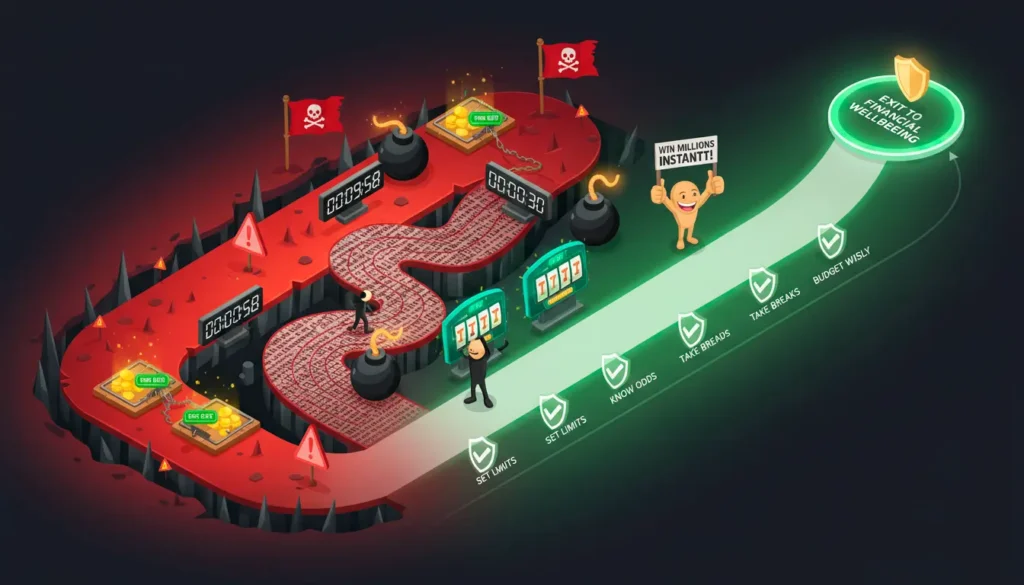
Here’s an uncomfortable truth: bonus hunting can be a gateway to problem gambling. The increased betting frequency, higher stakes, and constant chase for the next bonus can trigger addictive behaviors.
Set strict limits:
- Never deposit money you can’t afford to lose
- Never chase losses by taking worse bonuses
- Track time spent as well as money
- Take regular breaks from bonus hunting
- Never let bonus clearing interfere with real life
If you find yourself thinking about bonuses constantly, lying about your betting activity, or feeling anxious when not betting, stop immediately. No bonus is worth developing a gambling problem.
Tax Implications
In many jurisdictions, gambling winnings are tax-free. But bonus hunting profits might not qualify as gambling winnings — they could be considered income from a systematic business activity.
In the UK, gambling winnings are tax-free regardless. In the US, it’s complicated and varies by state. In Australia, professional gambling is taxable income. Consult a tax professional if you’re making significant profits from bonus hunting.
Keep detailed records regardless. If tax authorities ever question your income, you’ll need to prove where it came from. “I made £10,000 from bookmaker bonuses” sounds suspicious without documentation.
Future of Bonuses: The Evolution Continues
Industry Trend Analysis
The bonus landscape has changed dramatically in the past decade, and it’s accelerating. The trends are clear:

- Lower bonus values (£500 maximums becoming £100)
- Higher wagering requirements (5x becoming 20x)
- Shorter time limits (30 days becoming 7 days)
- More restrictive terms (minimum odds increasing)
- Better detection algorithms (AI-powered behavior analysis)
The golden age of bonus hunting — roughly 2010-2018 — is over. But opportunities still exist for those willing to adapt. The future belongs to those who can find value in increasingly restrictive offers.
Changing Regulations Impact
Governments worldwide are cracking down on gambling advertising and promotions. The UK’s Gambling Act review threatens to ban free bets entirely. Spain has already banned most bonuses. Australia prohibits inducement advertising.
This regulatory pressure will likely spread. Within five years, traditional deposit bonuses might be extinct in major markets. But bookmakers will find new ways to attract customers — they always do. The game will change, not end.
Technology’s Role
Artificial intelligence is the biggest threat to bonus hunters. Machine learning algorithms can now detect patterns humans would never notice. They analyze not just what you bet, but how you move your mouse, how long you spend reading terms, and thousands of other behavioral markers.
But technology cuts both ways. Automated tools make it easier to track bonuses, calculate value, and find arbitrage opportunities. The future bonus hunter will need to be part mathematician, part programmer, part psychologist.
Alternative Opportunities
As traditional bonuses become less profitable, new opportunities emerge:
Cryptocurrency betting sites offer larger bonuses with fewer restrictions, though with additional risks around regulation and payment processing.
Peer-to-peer betting exchanges eliminate the traditional bookmaker model, potentially offering different promotional structures.
Fantasy sports and prediction markets operate under different regulations, often with more aggressive promotional offers.
Esports betting is still finding its feet, with bookmakers offering experimental bonuses they haven’t yet optimized.
The key is staying ahead of the curve. By the time everyone knows about an opportunity, it’s usually too late to profit from it.
Follow our excellent trip handicapping guide.
The truth about bookmaker bonuses is that they’re neither the free money paradise the advertisements suggest nor the impossible trap that cynics claim. They’re a game with specific rules, and like any game, you can win if you understand those rules better than your opponents.
The bookmakers have math, psychology, and terms and conditions on their side. You have patience, discipline, and the ability to walk away. Used correctly, bonuses can provide a significant edge. Used carelessly, they’re an expensive way to subsidize the bookmaker’s marketing department.
My advice? Start small, read everything, track everything, and never bet more than you normally would just to clear a bonus. The bonus should enhance your regular betting, not replace it. And always remember: the flashier the bonus, the deeper you should read the terms.
The bookmakers want you to see bonuses as free money. Smart bettors see them as tools — useful when applied correctly, dangerous when mishandled. Which one you become depends entirely on how well you understand the game behind the game.
