
How to Read and Calculate Betting Odds Like a Professional
 Available in US
Let me guess. You’ve been staring at those numbers next to your team’s name, wondering why sometimes it’s +150 and other times it’s 2.50, and honestly, you’re not entirely sure what either means. Don’t worry, you’re not alone. I spent my first month betting thinking that bigger numbers always meant better odds. Spoiler alert: they don’t.

Here’s the thing about betting odds that nobody really tells you when you’re starting out. They’re not just random numbers thrown together by some guy in a back office. They’re a language, a mathematical poetry that tells you exactly what the bookmaker thinks about a match, what other punters are betting on, and most importantly, where you might find an edge. Master this language, and you’ll stop being the person funding the bookmaker’s yacht and start being the one they watch out for.
Table of Contents
Understanding Odds Formats: The Three Languages of Betting
Decimal Odds: The Universal Language
If betting odds were languages, decimal odds would be Esperanto — designed to be simple, logical, and understood by everyone. Unfortunately, like Esperanto, not everyone uses them, but they should.
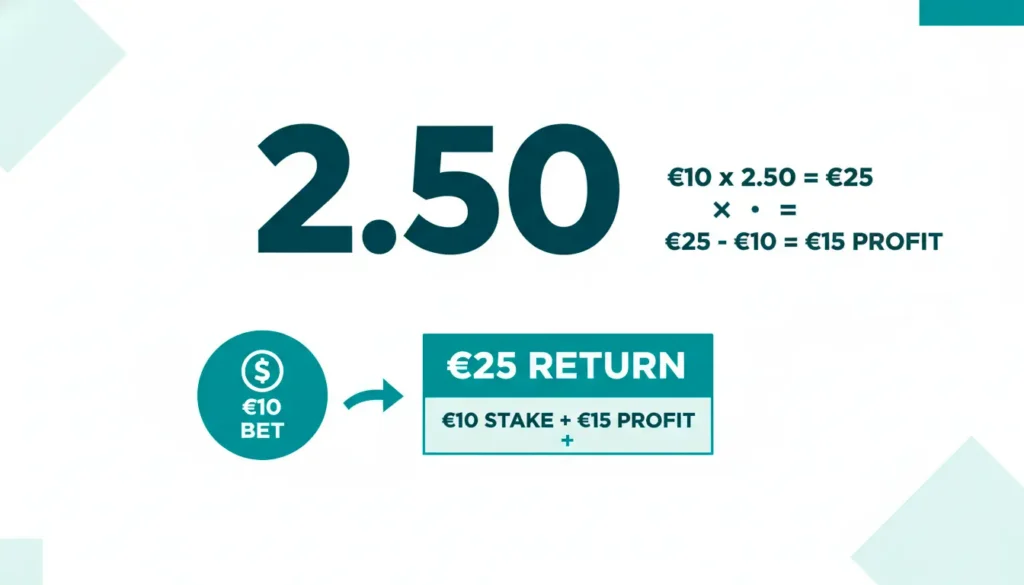
Decimal odds show you exactly what you’ll get back for every unit you bet. See odds of 2.50? Bet $10, get $25 back. That’s your $10 stake plus $15 profit. Simple as that. The beautiful thing about decimal odds is that the math never lies. Want to calculate your potential return? Just multiply your stake by the odds. Want to figure out the implied probability? Divide 1 by the odds and multiply by 100.
I’ll be honest with you — even though I grew up with fractional odds in the UK, I switched to decimal years ago. Why? Because when you’re comparing odds across five different bookmakers at 11 PM on a Tuesday, trying to figure out whether 13/8 is better than 8/5, your brain starts to melt. With decimals, 2.625 is obviously better than 2.60. No mental gymnastics required.
The Europeans had this figured out decades ago. While we were clinging to our fractions like they were family heirlooms, they were using a system that actually makes sense. And here’s a secret: most professional bettors use decimal odds, even if they’re British or American. It’s just easier when you’re calculating stakes, comparing values, and managing your bankroll.
Fractional Odds: The Traditional Approach
Fractional odds are like your grandfather’s watch — they still work, they have character, but they’re unnecessarily complicated for everyday use. You’ll see these primarily in the UK and Ireland, written as 5/2, 7/4, 100/30, and so on.
The fraction tells you your profit relative to your stake. So 5/2 means for every 2 units you stake, you’ll profit 5 units if you win. Bet £20 at 5/2? You’ll profit £50, getting back £70 total. Sounds straightforward enough until you’re trying to quickly calculate the returns on £17 at 13/8 while the odds are changing in real-time.
Here’s where it gets even more fun. Traditional bookmakers love what they call “odds-on” favorites, where the fraction flips. Odds of 1/2 mean you need to bet 2 units to profit 1 unit. It’s the bookmaker’s way of saying “this is probably going to happen, so we’re not paying much.” When I first encountered 2/5 odds, I genuinely thought it was a typo. Nope, just another quirk of the fractional system.
The real challenge comes with comparing fractional odds. Quick, which is better: 11/4 or 5/2? You need to convert them to the same denominator or convert to decimal. By the time you’ve figured it out, the odds have probably changed, and you’ve missed your opportunity.
American Odds: The Plus and Minus Game
American odds are like American football — completely different from what the rest of the world does, surprisingly complex once you dig into it, and absolutely dominated by the concept of winning or losing $100.
Positive American odds (+150, +275, +1000) tell you how much profit you’ll make from a $100 bet. So +150 means bet $100, profit $150, total return $250. Negative odds (-110, -150, -500) tell you how much you need to bet to profit $100. At -150, you’d need to bet $150 to profit $100.
The psychology here is actually clever. Negative odds immediately tell you who the favorite is — they’re literally marked with a minus sign. And the bigger that negative number, the heavier the favorite. When you see a team at -800, your brain immediately processes “massive favorite” without doing any math.
But here’s what drives me crazy about American odds: the calculations change depending on whether the odds are positive or negative. With positive odds, you divide the odds by 100 and multiply by your stake. With negative odds, you divide 100 by the odds (ignoring the minus) and multiply by your stake. It’s like having two different formulas for the same thing, which is exactly as annoying as it sounds.
Quick Conversion Cheat Sheet:
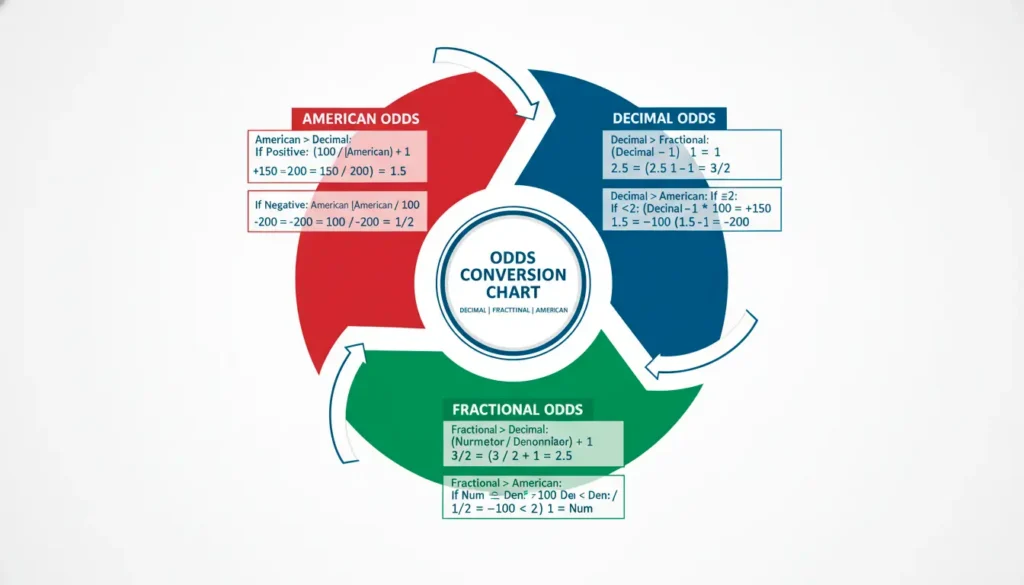
- Fractional to Decimal: Divide top by bottom, add 1
- Decimal to Fractional: Subtract 1, convert to fraction
- American to Decimal (positive): Divide by 100, add 1
- American to Decimal (negative): Divide 100 by odds, add 1
- Decimal to American (above 2.00): Subtract 1, multiply by 100
- Decimal to American (below 2.00): Divide -100 by (decimal – 1)
Advanced Odds Analysis: Finding Your Edge
Identifying Value: The Holy Grail
Value betting isn’t about finding winners. Let that sink in for a moment. It’s about finding bets where the odds offered are better than the true probability of the outcome. You could lose every bet this week and still be a good value bettor. You could win every bet and be terrible at finding value. In the long run, value is all that matters.
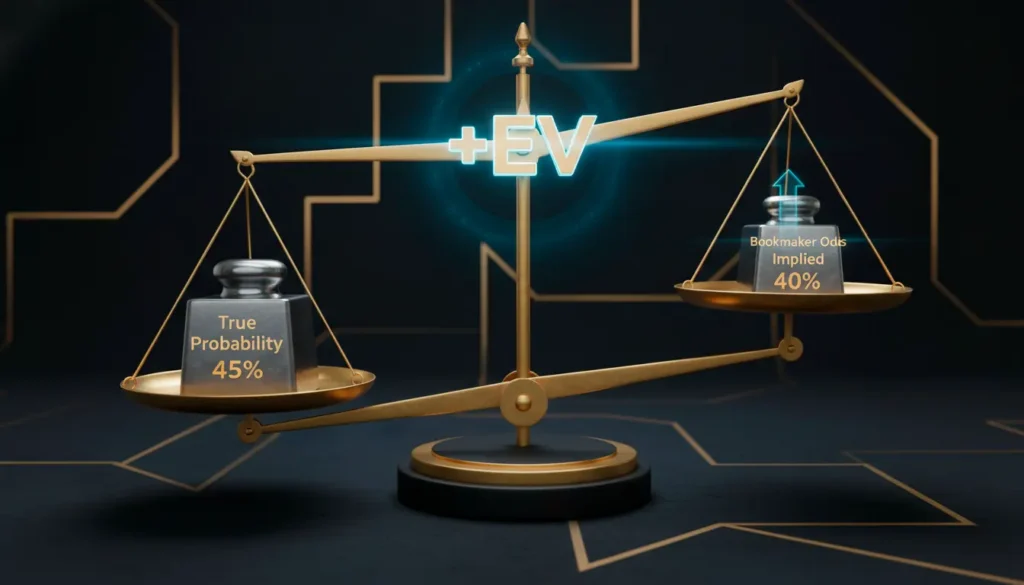
Think of it like this: if I offered you a coin flip where heads pays you $2.20 for every $1 you bet, would you take it? Of course you would. You’d lose roughly half the time, but when you win, you’re getting paid more than the true odds justify. That’s value.
The challenge is that sports aren’t coin flips. Manchester City playing Burnley isn’t a 50/50 proposition. So how do you determine the true probability? This is where the art meets the science. You need to develop your own tissue prices — what you think the odds should be — and compare them to what’s offered.
I started by focusing on one league, the Championship. Not the Premier League where everyone and their dog has an opinion, but the Championship where the odds compilers might be slightly less sharp. I watched every match I could, built spreadsheets tracking performance metrics, and slowly developed a feel for when odds were off. It took months before I found my first real edge, but when I did, it was like seeing the Matrix code for the first time.
Understanding Line Movement
Odds are living, breathing things. They move based on money, information, and sometimes just the bookmaker’s breakfast disagreement. Understanding why and when odds move is crucial to getting the best value.
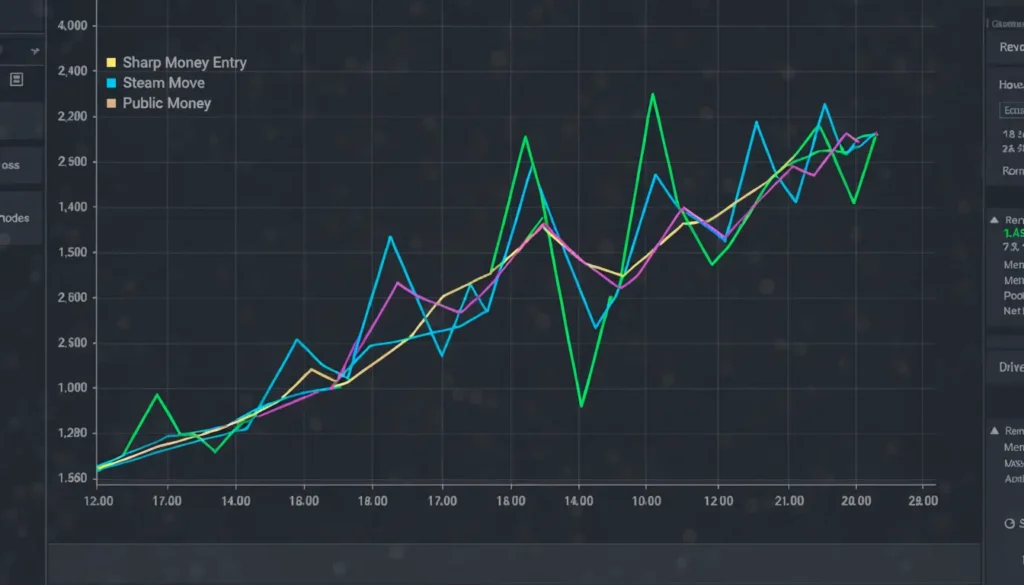
Early odds are often the most vulnerable. Bookmakers release them to test the waters, seeing where the smart money lands. If sharp bettors hammer one side, the odds adjust quickly. This is why you’ll sometimes see odds move dramatically in the first few hours after release, especially in smaller markets.
But here’s where it gets interesting: not all money is created equal. Bookmakers know the difference between sharp money and public money. When a known winning account places $1,000 on an underdog, that moves lines more than when a hundred recreational punters put $10 each on the favorite.
Steam moves — sudden, coordinated line movements across multiple bookmakers — are the holy grail of line watching. They usually indicate that sharp syndicates have found value and are hitting it hard. Following steam can be profitable, but by the time you see it, the value is usually gone. The real skill is anticipating where the steam will go before it happens.
Late line movement tells a different story. As game time approaches, the public money floods in. Favorites get backed, overs get hammered, and the popular narrative drives the odds. This is often where contrarian value emerges. When everyone’s backing Manchester United against Southampton at 1.40, that might be the time to look at Southampton +2.5 on the Asian Handicap.
Shopping for the Best Odds
Here’s a truth that hurts: if you’re only using one bookmaker, you’re leaving money on the table. It’s like shopping for groceries at the most expensive store in town because you can’t be bothered to check prices elsewhere.
The difference between 1.95 and 2.05 might seem trivial on a single bet. But compound that over hundreds of bets, and it’s the difference between profit and loss. I’ve tracked this meticulously — getting the best available odds on every bet increases my ROI by roughly 12%. That’s not optimization; that’s survival.
But odds shopping isn’t just about having accounts everywhere. It’s about knowing which bookmakers are sharp on which markets. Pinnacle might have the best odds on major soccer leagues, but they’re not as sharp on lower-tier tennis. Some bookmakers consistently offer better odds on underdogs, others on favorites.
And then there’s the art of catching slow-moving bookmakers. When news breaks — an injury, a lineup change, weather conditions — some bookmakers adjust faster than others. If you’re quick and informed, you can grab value before the odds shift. I once caught a bookmaker sleeping on a tennis retirement announcement and grabbed odds of 3.50 on the opponent when every other book had already moved to 1.50.
Practical Application
Calculating Implied Probability
If you remember nothing else from this article, remember this: every odds format can be converted to implied probability, and this is the key to understanding value.
For decimal odds, it’s beautifully simple: Implied Probability = (1 / Decimal Odds) × 100. Odds of 2.50? That’s a 40% implied probability. The bookmaker is saying this outcome has a 40% chance of happening.
Fractional odds require an extra step: Implied Probability = Denominator / (Numerator + Denominator) × 100. So 5/2 odds give you 2 / (5 + 2) × 100 = 28.57%.
American odds are, predictably, more complicated. For positive odds: Implied Probability = 100 / (American Odds + 100) × 100. For negative odds: Implied Probability = (-American Odds) / (-American Odds + 100) × 100.
But here’s the kicker — the implied probabilities for all outcomes in a market don’t add up to 100%. They add up to more, usually between 102% and 108%. That excess? That’s the bookmaker’s margin, their edge, the reason they drive better cars than you.
Test our new data driven strategies.
Understanding Overround/Vig
The overround, or vig (short for vigorish), is how bookmakers guarantee profit regardless of the outcome. It’s their fee for facilitating your bet, hidden in the odds themselves.
Let’s say you have a tennis match with two players at exactly 1.91 decimal odds each. The implied probability for each is 52.4%, totaling 104.8%. That 4.8% excess is the overround. It means that for every $100 wagered (split proportionally based on the odds), the bookmaker expects to pay out $95.20 and keep $4.80.
Different markets have different overrounds. Main markets on popular events might have 2-3% overround. Obscure markets or complex bets like first goalscorer? You might see 20% or more. This is why professionals stick to liquid markets with low margins — it’s hard enough to find value without fighting massive overrounds.
Here’s a pro tip: always calculate the overround before betting. If it’s above 110%, walk away. You’re fighting an uphill battle that’s too steep to climb consistently.
Bankroll Impact of Different Odds
Understanding how odds affect your bankroll over time is what separates recreational punters from professionals. It’s not about individual bets; it’s about the long-term mathematical expectation.
Let’s run some numbers. Say you make 100 bets at $10 each, with a 55% win rate — a solid edge. At even money (2.00 decimal), you’d profit $100. But at 1.91 (typical -110 American odds), you’d only profit $50.50. That seemingly small difference in odds just cost you half your profit.
Now flip it. If you consistently get 2.10 instead of 2.00, that same 55% win rate nets you $155 instead of $100. Over a year of betting, we’re talking thousands of dollars difference, all from shopping for better odds and understanding their impact.
This is why professionals obsess over closing line value and getting the best number. They understand that their edge is often razor-thin, maybe 2-3%, and poor odds can eliminate it entirely.
Tools and Resources
Let me save you some time and money: you don’t need expensive software to succeed at betting. You need a spreadsheet and discipline.
I built my own odds converter in Excel years ago. It converts odds between formats, calculates combined probabilities for multiple bets, and tracks my closing line value. Nothing fancy, just functional. The key is that I understand every formula in it. Black box calculators are dangerous if you don’t understand what they’re doing.
For live odds comparison, oddschecker-style sites are essential, but don’t trust them blindly. They sometimes show outdated odds or miss promotions. Always verify on the actual bookmaker site before placing a bet.
Essential calculations to have at your fingertips:
- Implied probability from any odds format
- Combined probability for multiple outcomes
- Each-way returns calculator
- Arbitrage calculator for finding guaranteed profits
- Kelly Criterion calculator for stake sizing
- Commission calculator for exchange betting
But here’s my warning: tools are only as good as the person using them. A Kelly Criterion calculator won’t help if you can’t accurately assess your edge. An arbitrage calculator won’t save you if you don’t understand how bookmakers limit winning accounts.
Find amazing sure bets via bookmakers-bet.
Market Dynamics: The Ecosystem of Odds
How Odds Change Pre-Match
The lifecycle of odds is fascinating when you really pay attention to it.
Opening odds are like rough sketches. Bookmakers release them days or even weeks in advance, especially for major events. These early odds are conservative, with higher margins and lower limits. The bookmaker is essentially saying, “Here’s our initial thoughts, but we’re not confident enough to take big bets yet.”
Then comes the price discovery phase. Sharp bettors probe for weakness, placing calculated bets on perceived value. The odds respond, tightening in some places, loosening in others. It’s a negotiation between the bookmaker’s opinion and the market’s collective wisdom.
As match day approaches, information crystallizes. Team news emerges, weather forecasts firm up, and public sentiment forms. Each piece of information nudges the odds. A key player fails a fitness test? The odds shift immediately. Rain forecast for a typically high-scoring fixture? The totals drop.
The final hours before kickoff are chaos. Public money pours in, following narratives and hunches rather than value. This is when contrarian opportunities often emerge, as the weight of public money can push odds beyond their efficient prices.
Live Odds Fluctuations
In-play betting is where odds go from science to jazz. Pre-match, bookmakers have time to calculate, adjust, and perfect their prices. Live? They’re improvising based on what just happened and what might happen next.
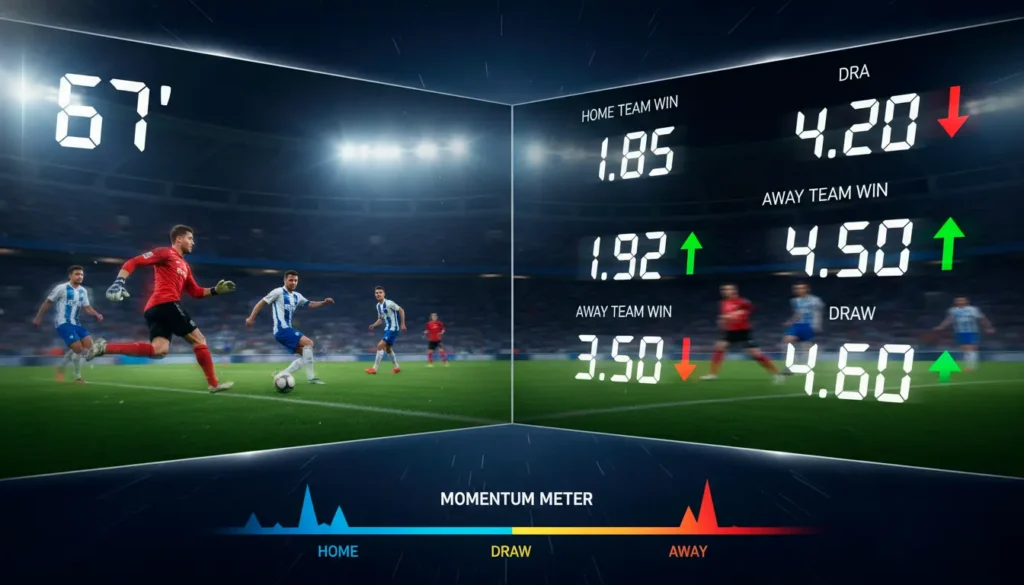
Goals obviously cause the biggest swings, but it’s the smaller movements that tell the real story. Watch the odds during a sustained period of pressure. They’ll gradually shift to reflect the momentum, sometimes overreacting to temporary dominance that doesn’t actually increase scoring probability that much.
I’ve seen odds swing from 2.00 to 1.70 during five minutes of pressure that produced no real chances, only to swing back when play evens out. These overreactions are where value lives in live betting, but you need nerves of steel and quick fingers to exploit them.
Red cards create particularly interesting dynamics. The market often overreacts initially, then gradually corrects as it becomes clear that ten men behind the ball can be harder to break down than eleven men playing openly.
Steam Moves and Reverse Line Movement
Steam moves are like wildfire in the betting market. One spark of sharp action, and suddenly every bookmaker is adjusting their odds in unison.
True steam moves happen fast — sometimes within minutes. You’ll see odds drop from 2.40 to 2.20 across a dozen bookmakers almost simultaneously. It’s coordinated, purposeful, and usually indicates that professional syndicates have found significant value.
Following steam blindly is a rookie move, though. By the time you see it, react to it, and place your bet, the value is gone. You’re just betting at the new, efficient price. The professionals who caused the steam are already counting their expected value while you’re chasing their shadows.
Reverse line movement is subtler but equally telling. This happens when the line moves opposite to the betting percentages. If 70% of bets are on Team A, but the line moves to favor Team B, that’s reverse line movement. It suggests that the 30% betting on Team B includes sharp money that bookmakers respect more than the public’s 70%.
I tracked reverse line movement in the NFL for an entire season. Betting on the team benefiting from reverse line movement hit at 54.3% against the spread. That might not sound impressive, but at -110 odds, you only need 52.4% to break even. That 1.9% edge, compounded over hundreds of bets, is the difference between a losing hobby and a profitable investment.
Closing Line Value Importance
Let’s settle this once and for all: closing line value is the single best predictor of long-term betting success.
The closing line represents the market’s most informed opinion. It’s absorbed all available information, weathered all the sharp action, and adjusted for all known factors. Consistently beating it means you’re identifying value before the market fully prices it in.
I track my CLV religiously. Every bet goes into a spreadsheet with the odds I got and the closing odds. Over my last 1,000 bets, I’ve beaten the closing line on 58% of them, by an average of 3.2%. That might sound modest, but that edge, over time, is worth thousands.
Some bettors chase CLV so aggressively that they’ll bet anything that moves in their favor, regardless of their own analysis. That’s missing the point. CLV should validate your handicapping, not replace it. If you’re consistently on the right side of line movements in markets you understand, you’re doing something right.
The beautiful thing about CLV is that it’s objective. You can’t lie to yourself about whether you beat the closing line. Either you did or you didn’t. No excuses, no narratives, just mathematical reality.
The Reality Check
Here’s what nobody tells you when you start betting: understanding odds is just the beginning. It’s like learning to read music — necessary, but it doesn’t make you a musician. You still need to develop your ear, practice your timing, and find your style.
The math matters. The calculations matter. But what matters most is developing the discipline to use this knowledge consistently. Every professional bettor I know can calculate implied probability in their sleep. What separates them from losing punters isn’t their math skills — it’s their ability to find value and exploit it systematically over thousands of bets.
Start small. Pick one league, one sport, even one team if necessary. Learn to price their matches accurately. Compare your prices to the market. Track whether you’re beating the closing line. Build from there.
And remember: the bookmakers have teams of analysts, sophisticated algorithms, and decades of experience. You’re not trying to be smarter than them. You’re trying to find the small edges they leave open, the inefficiencies in their models, the spots where public perception has pushed odds beyond their true value.
Master the language of odds first. Then learn to speak it fluently. Eventually, you’ll start to hear what the numbers are really saying — and more importantly, what they’re not saying. That’s when betting transforms from gambling into investment, from hoping into knowing.
The odds will always tell you a story. The question is: are you listening?
