
Key Betting vs. Box Betting: Which Strategy Wins More?
 Available in US
The eternal debate among exotic bettors eventually boils down to a fundamental question of conviction versus coverage. Boxing covers every possible finishing arrangement of your selected horses, providing maximum protection against the agonizing scenario where you picked the right horses in the wrong order. Keying, by contrast, locks one or more horses into specific positions, reducing your cost while requiring your handicapping to be more precise. Neither approach is inherently superior; the winning strategy depends on race conditions, your confidence level, and whether the potential payouts justify the betting structure you choose.
Manage your bankroll effortlessly via bookmakers-bet.
Most recreational bettors gravitate toward boxes because they feel safer. The logic seems sound: if you can identify three horses that will occupy the top three positions, why risk losing because you guessed the order wrong? But this logic contains a hidden trap. Boxing treats all combinations as equally likely, investing the same amount on the favorite winning as on the longest shot in your box winning. Your handicapping has probably assigned different probabilities to each horse, yet your box ignores this hierarchy entirely. Keying forces you to commit to your opinions, and in gambling, conviction properly placed tends to outperform diffuse coverage over time.
Understanding when to box and when to key requires analyzing both the race at hand and your own handicapping process. Some races practically scream for boxes: competitive fields where multiple horses show similar form and class levels, no clear pace scenario favoring any particular running style, and payout structures that reward wide coverage. Other races demand keying: dominant favorites likely to win but uncertain exacta partners, specific pace scenarios that favor one horse over others, and situations where your handicapping has generated genuine insights about probable finishing order.
Table of Contents
The Mathematics of Efficiency
The cost difference between boxes and keys creates the foundation for this strategic decision. A four-horse exacta box costs $24 at the $2 minimum, covering twelve combinations. A keyed exacta with one horse on top and three horses underneath costs just $6, covering three combinations. The box provides four times the coverage at four times the price. Whether that trade-off makes sense depends entirely on whether you believe all four horses have equal chances of winning.

Consider a race where the morning line shows Horse A at 2-1, Horse B at 5-1, Horse C at 8-1, and Horse D at 12-1. Your handicapping confirms that A is the most likely winner, though B, C, and D all have legitimate chances to finish second. A four-horse box invests equally on A winning, B winning, C winning, and D winning. But if A truly has a 33% chance of winning while D has only an 8% chance, you are dramatically over-betting D’s win scenarios and under-betting A’s. Keying A on top with B, C, and D underneath aligns your betting structure with your actual opinion.
The payout implications compound this effect. If A wins and B finishes second, the exacta might pay $35. If D wins and A finishes second, the same exacta might pay $120 because fewer bettors had the longshot on top. Your box collected $35 on a $24 investment, a modest profit of $11. But if you had keyed A over B, C, and D for $6 and also keyed B, C, and D over A for another $6, your total investment of $12 would have returned either $35 from the A-B combination or potentially much more if D had upset. The keyed structure allows you to weight your investment toward more likely outcomes while maintaining exposure to upsets.
Part-wheels extend this logic further. Instead of keying one horse, you might place two horses in the win position, three in the place position, and four in the show position for trifecta wagering. This structure acknowledges that your confidence decreases as you move down the order of finish. Your two top selections compete for first, your three horses contest second, and your four horses battle for third. The combinations multiply according to position, but the cost remains far below a full box of your entire horse universe.
Situations Favoring Box Bets
Boxing shines brightest when genuine uncertainty pervades your handicapping. If you have identified four horses that all appear equally likely to finish in the money but cannot separate them by probability, boxing acknowledges your uncertainty honestly. Pretending to know the winner when you genuinely do not wastes money on keyed combinations that miss when your “key” horse runs fourth.
Maiden races often present ideal boxing opportunities. First-time starters lack race records, making form analysis speculative at best. Horses with strong workouts might be morning glories who wilt under race pressure. Horses with modest workouts might be saved for their debut. Trainers known for winning first out might have multiple entries. In such fog, boxing your contenders admits that the race is essentially unpredictable within your selection group while still allowing you to profit if your group sweeps the top positions.
Turf races at tracks with significant course bias sometimes favor boxes. If the rail has been playing dead all day, inside post positions become liabilities regardless of horse quality. If you have identified four horses with outside posts as your contenders but genuinely cannot separate their chances, boxing captures the randomness of who gets the best trip. The horse that finds the clearest path through the stretch might be any of your four selections.
Short fields can also justify boxes because the cost remains manageable while the probability of your selections sweeping increases. In a five-horse field, a four-horse exacta box costs $24 and covers 80% of all possible exacta combinations. This high coverage percentage means that unless you have eliminated one horse entirely, boxing captures nearly every scenario. In contrast, the same box in a twelve-horse field covers less than 10% of possible combinations, making targeted keying more appropriate.
Situations Favoring Key Bets
Keying becomes the optimal strategy when your handicapping has generated genuine conviction about at least one horse’s finishing position. The classic scenario involves a dominant favorite that you believe will win but whose exacta partners are uncertain. Keying this favorite over your other contenders costs a fraction of boxing while capturing the most likely outcomes.
Speed-favoring tracks during speed-favoring race conditions present natural keying opportunities. If the track is playing fast and favoring front-runners, and your speed figure analysis shows one horse with vastly superior early speed, keying that horse to win acknowledges the reality that pace scenarios create predictable outcomes. The horse on the lead turning for home in a speed-favoring race wins more often than probability models based purely on class would suggest.
Find great internal trainer jockey clues.
Class drops with form reversals also favor keying. When a horse drops significantly in class after showing troubled trips in recent races, your form analysis might correctly identify this horse as the most likely winner despite morning line odds that do not fully reflect the class advantage. Keying this horse on top allows you to invest more heavily in your insight while spreading underneath to capture various exacta and trifecta combinations.
Stakes races with proven closers in stalking positions often reward keying strategies. A horse with demonstrated ability to rate off the pace and accelerate in the stretch benefits from honest early fractions. If the pace scenario appears likely to unfold in a way that sets up this horse, keying makes more sense than boxing with speed horses that your analysis suggests will fade. Your handicapping has told you something about probable race shape; keying transforms that knowledge into betting structure.
Hybrid Approaches
The binary framing of key versus box obscures the most sophisticated approach: combining both structures across multiple tickets. A comprehensive exotic strategy might include a primary ticket keying your top selection over secondary contenders, a saver ticket keying your secondary contenders over your top selection, and perhaps a small box of longshots as a lottery play.
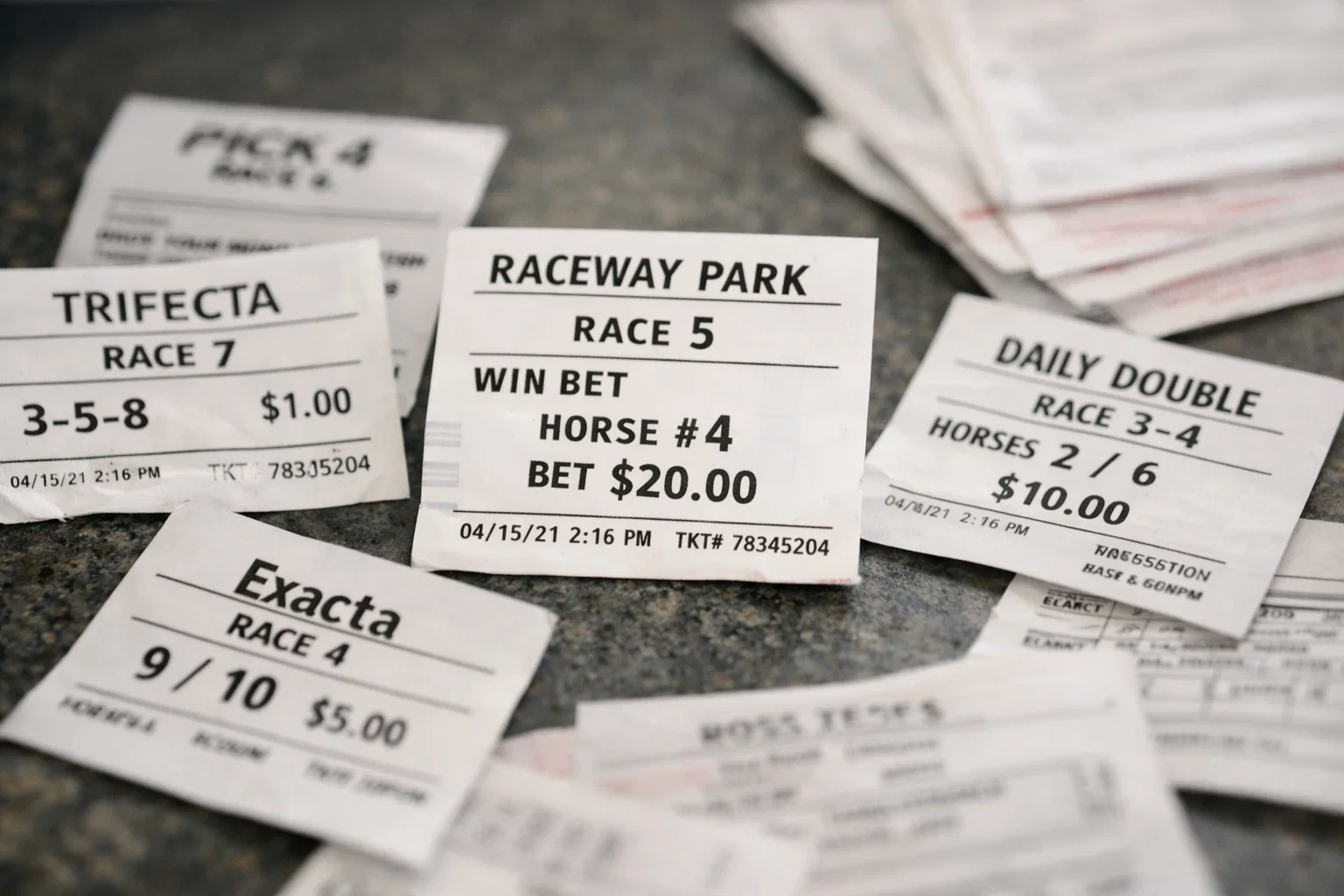
This multi-ticket approach allows you to weight your investment according to your probability assessments while maintaining coverage against mistakes. If you believe Horse A has a 40% chance of winning and Horses B, C, and D each have 15-20% chances, your primary ticket might key A over B, C, D for $6. Your saver might key B and C over A for $4. Your longshot play might key D over all others for $2. Total investment: $12, compared to $24 for a full box, with betting structure that mirrors your actual opinion.
The key-box hybrid also helps manage variance. Pure keying produces feast-or-famine results: you either hit your key and collect, or you miss entirely and collect nothing. Pure boxing produces more cashes but at lower profit margins because your cost approaches your payout in competitive races. The hybrid approach smooths returns by capturing more winning scenarios while maintaining the cost efficiency that produces meaningful profits when your handicapping proves correct.
Advanced players often maintain rolling records of their box versus key performance across different race types. Some discover that they key successfully in routes but should box sprints. Others find that they box profitably at lower class levels where form is inconsistent but should key at allowance and stakes levels where class differences create more predictable outcomes. Personal track records reveal tendencies that pure theory cannot predict.
The Verdict
No universal answer exists to whether keying or boxing produces better long-term results. The winning strategy depends on matching your betting structure to the characteristics of each race and the quality of your handicapping insights. When you have genuine conviction based on sound analysis, keying transforms that conviction into an efficient betting structure that maximizes profit when correct. When uncertainty dominates, boxing admits that uncertainty and spreads your investment across multiple scenarios.
The worst approach is defaulting to the same structure regardless of conditions. Bettors who always box waste money on races where their handicapping has correctly identified a likely winner. Bettors who always key leave money on the table during genuinely competitive races where any of several horses might win. Flexibility, guided by honest assessment of your own confidence level, produces the best results.
Pay attention to probable payouts before committing to either structure. A four-horse box costs $24, and if the likely winning combinations pay $35-50, your profit margin is slim even when correct. The same $24 structured as three separate keyed tickets might cover more scenarios with better expected value because you are investing more heavily in higher-probability outcomes. Cost efficiency is not about spending less; it is about investing your betting dollars in ways that reflect your true opinion of each horse’s chances.
