
Field Size Strategy: Small vs. Large Fields in Exotic Betting
 Available in US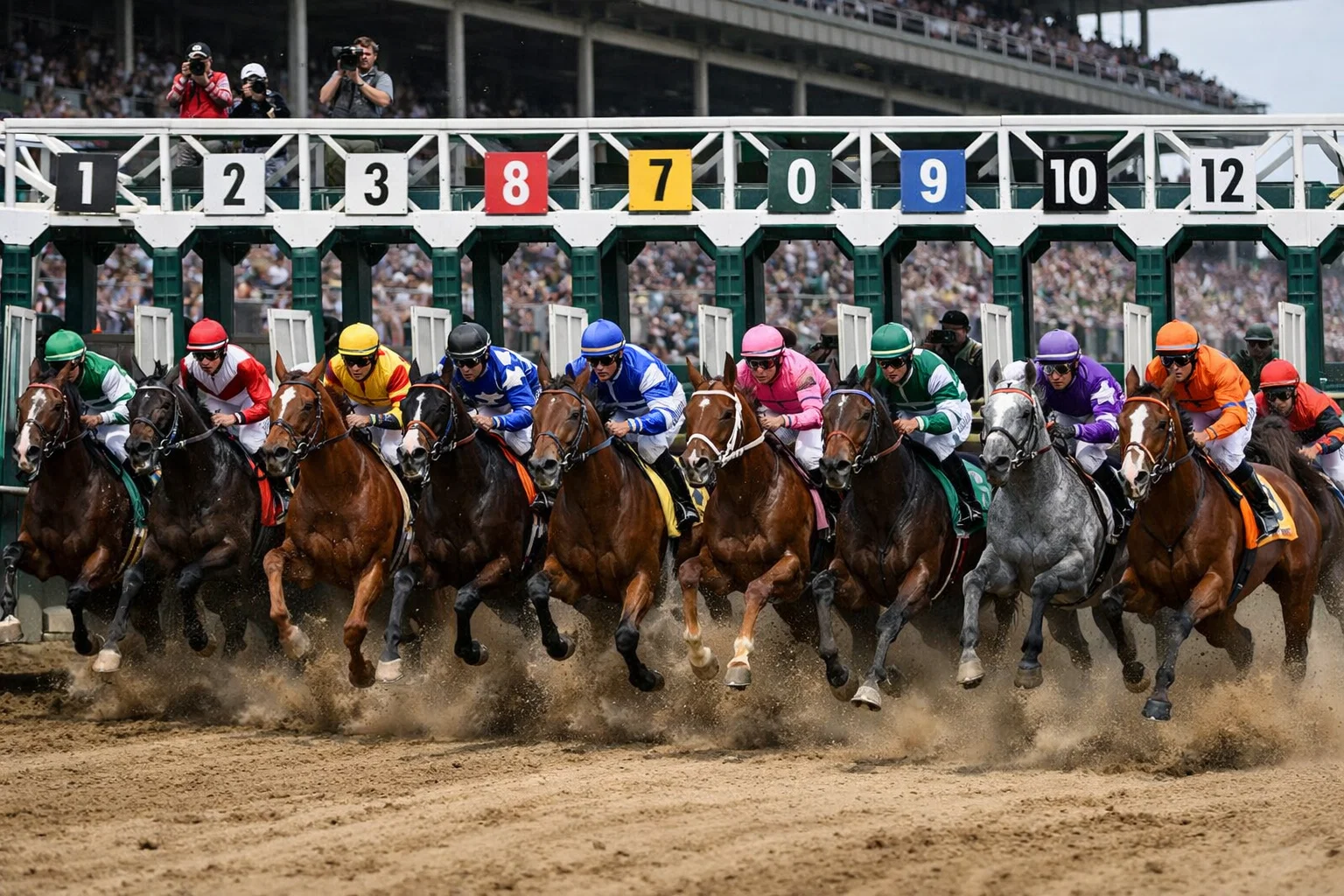
The number of horses entered in a race fundamentally shapes exotic betting mathematics, risk profiles, and strategic options. A six-horse field and a fourteen-horse field require entirely different approaches even when the class level and race type appear similar. Understanding how field size affects combination counts, payout structures, and optimal betting strategies allows you to calibrate your exotic investments for maximum efficiency regardless of the competitive landscape.
Choose the top platforms at bookmakers-bet.
Large fields attract exotic bettors like moths to flame because the combination possibilities explode, driving potential payouts into territory that makes small investments worth consideration. A twelve-horse trifecta offers 1,320 possible outcomes compared to just 120 in a six-horse field. This eleven-fold increase in combinations generally correlates with larger betting pools and proportionally higher payouts when longshots infiltrate the top three. The Kentucky Derby’s twenty-horse field produces trifecta and superfecta payouts that regularly exceed four and five figures precisely because the difficulty of predicting the exact order increases exponentially with each additional horse.
Small fields present the opposite dynamic. With fewer horses, the probability of your selections finishing in the money increases, but the payouts compress because more bettors correctly identify the likely contenders. A five-horse exacta box covering four horses captures 80% of possible outcomes, making it nearly a lock when your handicapping correctly eliminates one horse. But that same coverage percentage means the exacta pool has limited dead money from losing tickets, suppressing returns even when you correctly predict the finishing order. The strategic question becomes whether the higher hit rate compensates for the lower payouts.
Table of Contents
Large Field Mathematics
The combination formula for exotic bets reveals why large fields generate excitement. For trifectas, the number of possible outcomes equals n x (n-1) x (n-2), where n represents the field size. A ten-horse field produces 720 possible trifecta combinations. A fifteen-horse field explodes to 2,730 combinations. A twenty-horse field like the Kentucky Derby generates 6,840 possibilities. Each additional horse multiplies the difficulty and, typically, the potential payout.
Superfecta mathematics amplify these effects further. The formula n x (n-1) x (n-2) x (n-3) creates staggering combination counts in large fields. A ten-horse superfecta offers 5,040 possible outcomes. A fifteen-horse field reaches 32,760 combinations. The Derby’s twenty-horse field produces 116,280 superfecta possibilities, explaining why hitting the exact top four can pay six figures even with modest longshots involved.
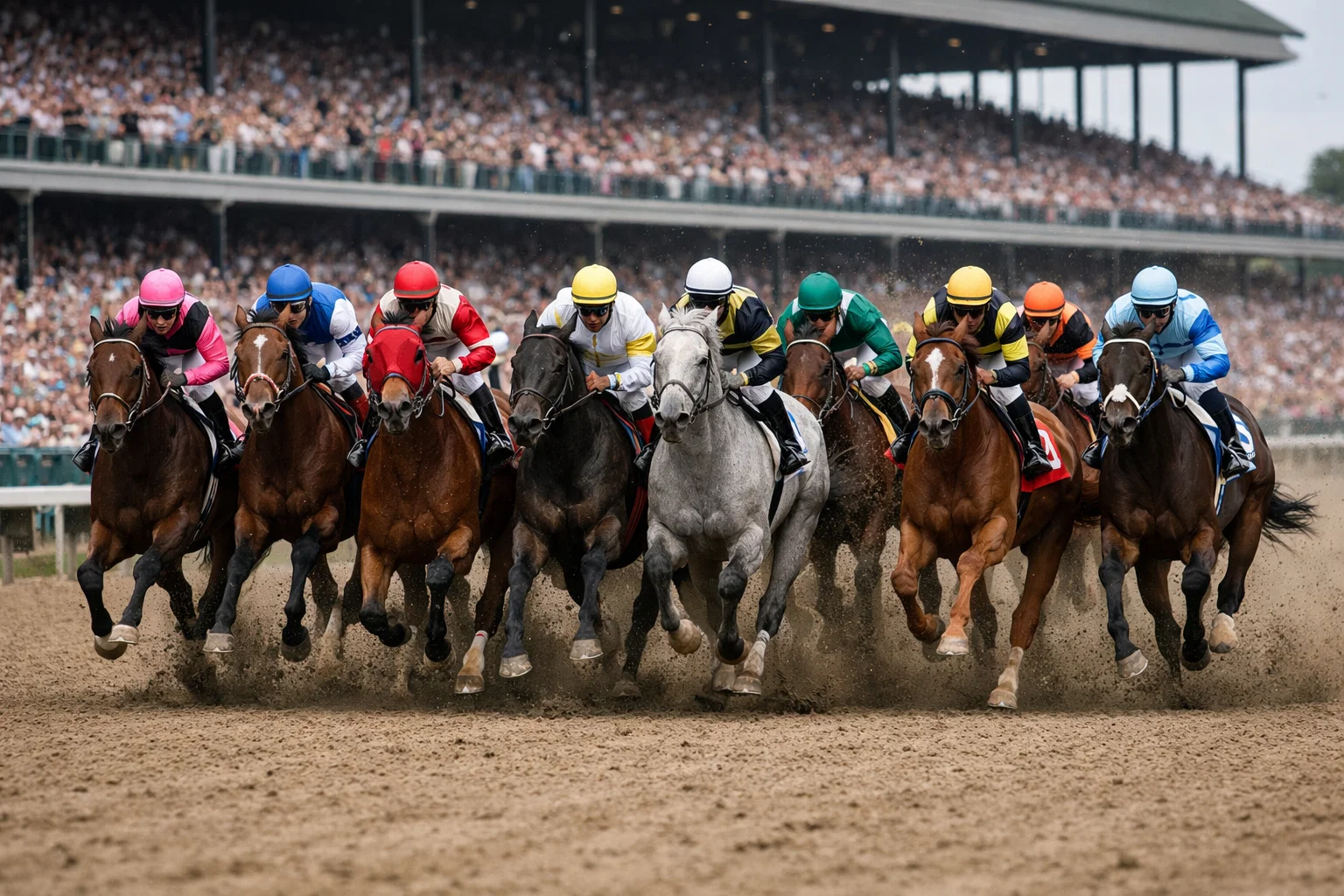
Large fields also tend to attract larger betting pools because the potential payouts draw more action. A stakes race with a twelve-horse field at a major track might generate a trifecta pool of $500,000 or more, while a similar-quality race with six horses might attract only $100,000. The larger pool means that even when favorites dominate, the absolute payout can exceed what you would receive from a small-field result with similar odds horses.
The practical implication for box bettors is that large fields require careful cost management. A five-horse trifecta box costs $60 and covers only 60 of 720 possible combinations in a ten-horse field, representing about 8% coverage. The same $60 buys complete coverage in a six-horse field where the five-horse box captures 83% of possibilities. Large fields demand selective boxing and strategic use of part-wheels to maintain meaningful coverage without hemorrhaging money.
Small Field Opportunities
Small fields, typically defined as five to seven horses, flip the exotic calculus. The reduced number of combinations means your handicapping analysis can achieve near-complete coverage at reasonable cost. A four-horse exacta box in a five-horse field costs $24 and covers 12 of 20 possible outcomes, representing 60% coverage. If your handicapping correctly identifies the top four, you have excellent probability of cashing.
The diminished unpredictability of small fields makes straight exotic bets more viable. In a large field, predicting the exact order feels like lottery play. In a small field, the form analysis more reliably identifies the likely top three, and a straight trifecta costs just $1 compared to $6 or more for boxes. When your conviction runs high on a short-field race, straight plays capture full payouts at minimal cost.
Cold trifectas become genuinely playable in small fields. Playing cold means betting a single combination without boxing or wheeling. This approach is essentially impossible in large fields where even the best handicapping cannot reliably predict exact finishing order among twelve or more horses. But in a five-horse field where three horses clearly outclass the other two, a cold trifecta on your predicted 1-2-3 order offers 100% of the payout for a $1 investment rather than $6 for the box.
Small fields also reduce the variance that plagues exotic bettors. In large fields, a single longshot intruding into the top three invalidates most tickets and produces unpredictable payouts. Small fields contain fewer horses capable of springing upsets, making results more consistent with form. This reduced variance means that small-field exotic specialists can approach their betting more like handicapping exercises than lottery plays, with reasonable expectations about hit rates and average returns.
Payout Considerations
The relationship between field size and payout is not perfectly linear. Several factors mediate the connection, including pool size, favorite odds, and public betting patterns. A seven-horse field with a 3-5 favorite and 20-1 longshots might produce a higher trifecta payout than a ten-horse field where the top five choices are all between 4-1 and 8-1. The distribution of odds within the field matters as much as the raw number of entrants.
Public money concentration affects exotic payouts significantly. In small fields, the betting public often correctly identifies the top two or three contenders, loading the pools with tickets on obvious combinations. When favorites oblige, these chalky results produce minimal payouts even with the reduced combination count. A 1-2 exacta in a five-horse field might pay only $12 when the 2-1 favorite beats the 5-2 second choice because half the exacta pool went to that specific combination.
Large fields distribute public money more widely, creating opportunities for overlay situations where your specific combination is under-bet relative to its actual probability. When a 6-1 horse beats a 4-1 horse in a twelve-horse field, the exacta might pay $85 because most bettors had the favorite on top. The same result in a five-horse field might pay only $35 because fewer alternatives existed for the betting public to consider.
The optimal approach weighs payout probability against cost efficiency. Large fields justify higher total investments because the potential returns scale accordingly. Small fields call for concentrated, low-cost bets because even when you hit, the payouts rarely exceed modest multiples of your investment. A $50 exotic budget might spread across multiple horses in a large-field stakes race but focus on a single straight trifecta or small box in a short-field allowance.
Strategic Adaptations
Large-field exotic strategy emphasizes selectivity and structure. Rather than boxing every contender, part-wheel constructions focus investment on higher-probability combinations while maintaining exposure to upset scenarios. In a twelve-horse race, a part-wheel with two horses in the win position, four in place, and six in show creates 48 trifecta combinations at $48, covering far more scenarios than a four-horse box at $24 while reflecting your tiered confidence levels.
Including at least one longshot in large-field exotic tickets dramatically affects payout potential. A trifecta with three favorites might pay $150, while the same favorites with a 15-1 horse substituted for third might pay $450. The marginal cost of adding longshot coverage through part-wheels typically justifies the investment in large fields where upsets occur with meaningful frequency.
Small-field strategy tilts toward conviction plays. When your handicapping strongly favors one horse, keying that horse on top with the remaining contenders underneath costs less than boxing while capturing most winning scenarios. A key trifecta in a six-horse field with one horse over five others costs $20 versus $120 for a full six-horse box. If your top selection has 50% or better win probability, the key structure provides superior expected value.
Learn more about key vs box.
Dime superfectas become attractive in small fields because the reduced combination count makes meaningful coverage affordable. In a six-horse field, a five-horse superfecta box costs just $12 at the ten-cent minimum, covering 120 of 360 possible outcomes. In a twelve-horse field, the same five-horse box still costs $12 but covers only 120 of 11,880 possibilities. Small-field dime superfectas offer legitimate lottery value that large-field superfectas cannot match.
Field Size and Bet Selection
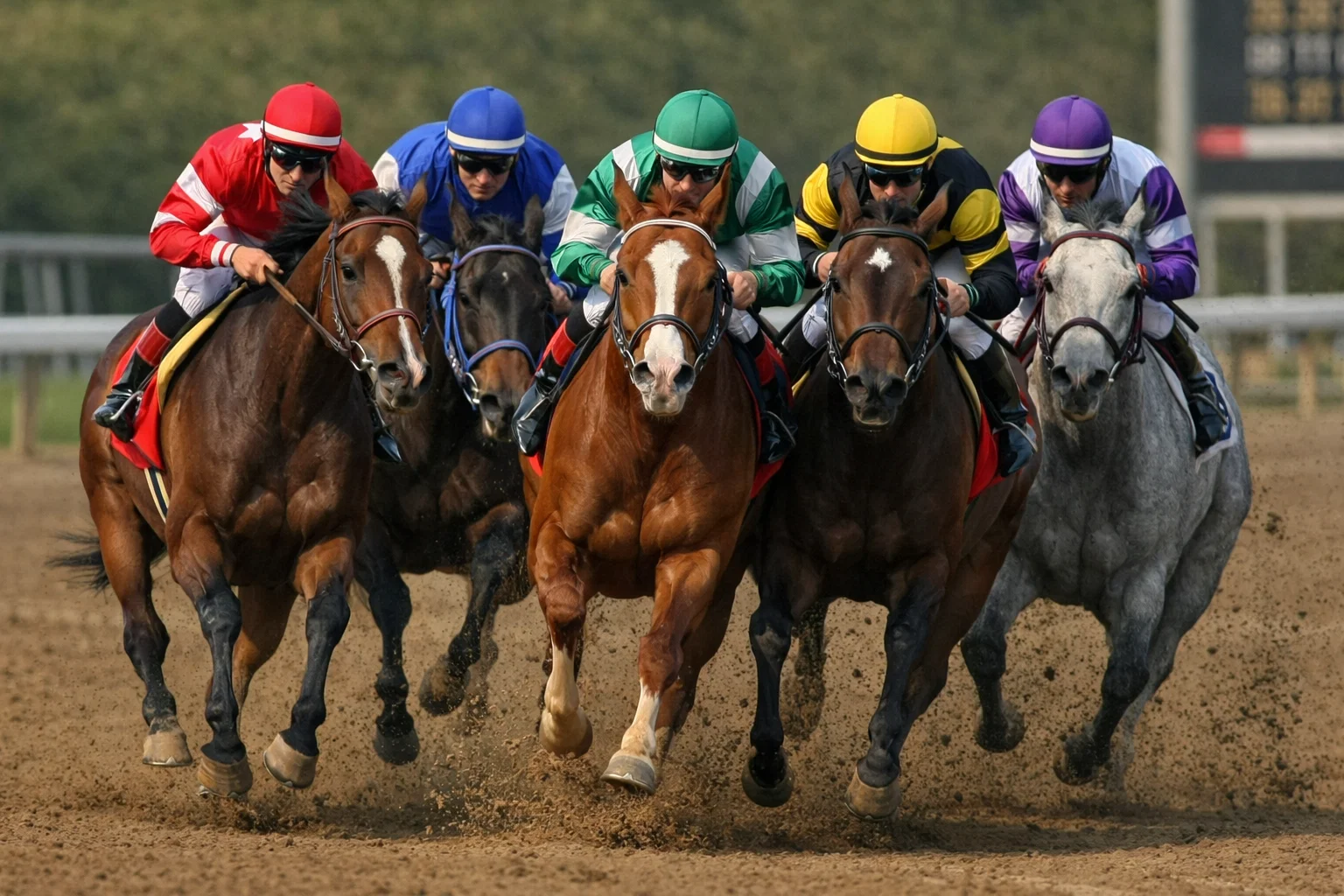
Different exotic bet types suit different field sizes based on their combination mathematics. Exactas work well across all field sizes because the two-position structure keeps combination counts manageable. A five-horse exacta box costs $20 regardless of whether the field contains six horses or sixteen. The coverage percentage differs dramatically, but the absolute cost remains constant.
Trifectas favor medium to large fields where the three-position structure justifies the complexity. In a four or five horse field, trifecta boxing covers such a high percentage of outcomes that payouts rarely justify the investment over exactas. Once fields reach eight or more horses, trifecta pools generate returns that meaningfully exceed exacta payouts for the additional difficulty.
Superfectas require large fields to function properly. In small fields, the four-position requirement nearly dictates the result before handicapping begins. A four-horse superfecta box in a five-horse field covers 24 of 120 possible outcomes at $2.40, but the payout when four of five horses sweep the top four rarely exceeds $50. Large fields separate superfecta winners from losers, producing the four and five figure payouts that justify the wager’s difficulty.
Multi-race exotics like Pick 3, Pick 4, and Pick 6 sequences benefit when at least one leg features a large field. A Pick 4 with four small fields might offer only 1,200 possible combinations, producing a pool too small for meaningful payouts. The same Pick 4 with one or two large-field legs can expand to 50,000 or more combinations, attracting larger pools and bigger potential returns. Structuring multi-race tickets to spread more widely in large-field legs while singling in small-field legs optimizes the cost-to-coverage ratio.
The intelligent exotic bettor adjusts strategy race by race based on field size rather than applying a uniform approach. Large fields reward creative part-wheeling and longshot inclusion. Small fields favor conviction plays and straight bets. Matching your betting structure to the field composition maximizes the probability of profitable long-term results across all types of races.
