
Common Box Betting Mistakes and How to Avoid Them
 Available in US
Box betting appeals to horseplayers because it simplifies the handicapping decision: instead of predicting exact finishing order, you identify the horses most likely to occupy the top positions and let the box structure handle the permutations. This simplicity masks several traps that consistently drain bankrolls and frustrate bettors who wonder why their boxes rarely pay despite containing the right horses. Recognizing and avoiding these common mistakes transforms box betting from an expensive habit into a profitable skill.
Gain an unbeatable edge via bookmakers-bet.
The most prevalent error is treating all boxes equally regardless of cost and probable payout. A four-horse trifecta box costs $24, but whether that investment makes sense depends entirely on the expected return. In a race where all four of your selections are short prices, the winning trifecta might pay only $40-60, leaving minimal profit after your substantial investment. In a race with genuine longshots among your selections, the same trifecta might pay $300-500, justifying and exceeding the box cost. Successful box bettors evaluate each box as an investment proposition, not just a coverage exercise.
The second universal mistake involves adding horses to boxes without considering the exponential cost increase. Each additional horse in a trifecta box adds far more combinations than the previous horse. Moving from four horses to five increases your cost from $24 to $60, a 150% jump for 25% more horses. Moving from five to six adds another $60 to reach $120 total. The marginal horse you add for safety might be the difference between a profitable hit and a break-even or losing cash.
Table of Contents
Over-Boxing with Favorites
The most expensive box betting mistake involves loading your box with favorites who provide coverage but destroy value. When three of your four horses in a trifecta box are odds-on or single-digit prices, the most likely winning combinations pay poorly relative to your $24 investment. You might hit and still feel disappointed because the return barely exceeds your cost.
Consider the mathematics: a trifecta with a 3-1 winner, a 4-1 second, and a 5-1 third might pay $80 at a major track. Your $24 box returns $80, generating $56 profit on a correctly predicted finish. But if you miss that specific combination and instead hit with the 3-1 winner, 2-1 second choice, and the 4-1 third, the trifecta might pay only $45, barely doubling your investment. And if two favorites run one-two with a third favorite in third, the payout might be $25-35, returning less than a modest profit on your $24 investment.
The solution involves deliberate longshot inclusion. Instead of boxing the four horses most likely to finish in the money, box three likely horses plus one higher-odds contender whose presence in the top three would generate a meaningful payout. This approach sacrifices some coverage for substantially improved payout potential. You will miss some boxes that would have hit with four favorites, but the enhanced returns when your longshot runs into the money more than compensate over time.
Part-wheel construction offers another antidote to the over-favorite problem. Instead of boxing favorites equally, place them in positions according to your genuine confidence hierarchy. If you believe the favorite will win but are uncertain about the place and show horses, key the favorite on top with your other contenders underneath. This structure costs less than a full box while concentrating investment on the outcome you consider most probable.
Under-Boxing and Missing Winners
The opposite error involves being too selective and repeatedly missing winning boxes by one horse. If you consistently identify three of the top four finishers but leave out the fourth, you are experiencing the frustration of under-boxing. The money saved by not including that additional horse feels hollow when race after race your three selections sweep the exacta but miss the trifecta because an excluded horse grabbed third.
The solution requires honest post-race analysis. Keep records of your boxes and the actual results. When you miss, was the horse who beat you genuinely unforeseeable, or did your handicapping identify that horse as a contender whom you excluded for cost reasons? If you consistently leave out horses your own analysis flagged as possibilities, your box sizing is too conservative.
Expanding from a three-horse trifecta box at $6 to a four-horse box at $24 quadruples your cost but dramatically improves your hit rate. If your handicapping identifies four genuine contenders, the three-horse box becomes false economy. You might hit once in twenty attempts with the cheaper box but twice in ten attempts with the expanded version. The math favors paying for proper coverage when your handicapping supports the additional inclusion.
The balance point differs by race. In genuinely competitive races where six or seven horses have legitimate chances, even a five-horse box might leave out winners. In races with clear separation between contenders and pretenders, a three-horse box might capture all reasonable scenarios. Match your box size to the race complexity rather than applying a uniform approach regardless of conditions.
Ignoring Probable Payouts
Many box bettors never check the probable payouts before committing their wager. They box their selections, watch the race, and only then discover whether the return justifies the investment. This backwards approach guarantees that many winning boxes produce disappointing returns because the bettor never evaluated whether the expected payout exceeded the cost.
Modern betting platforms display will-pay tables showing the probable payout for each exacta and trifecta combination based on current pool composition. Before finalizing any box, review these tables for your likely winning combinations. If most combinations involving your selections show payouts of $30-50 and your box costs $24, the expected value is marginal even when you hit. If several combinations show $100 or more, the box represents genuine value.
Adjust your bet structure based on this analysis. When probable payouts run low relative to cost, reduce your investment or switch to a keyed structure that costs less while targeting the highest-paying outcomes. When probable payouts substantially exceed your cost, consider increasing your base bet amount to capitalize on the favorable mathematics. Let the pool composition guide your investment level rather than applying fixed sizing regardless of value.
The timing of your bet affects payout evaluation because pools shift until race time. Early probable payouts might show attractive returns that evaporate as late money pours in on favorites. Conversely, longshots might offer even better value late in the betting cycle when favorite-heavy action has concentrated on predictable combinations. Many professional exotic bettors wait until the final minutes before post to commit their wagers, ensuring they bet on numbers that reflect the final pool composition.
Playing Every Race
The compulsion to box every race on the card represents one of the most bankroll-destructive habits in horse racing. Exotic bets extract higher takeout than straight win bets, often 20-25% compared to 15-17% for win pools. Boxing every race means paying this premium takeout on wagers where your handicapping provides little or no edge. The cumulative cost of constant action virtually guarantees long-term losses regardless of handicapping skill.
Selectivity dramatically improves exotic results. Rather than boxing ten races per day, identify the two or three races where your handicapping has generated genuine insight and concentrate your exotic investment there. Pass races where the favorite appears nearly unbeatable at short prices. Pass races where too many contenders make any box prohibitively expensive. Pass races where you genuinely cannot separate the field and any result seems equally likely.
The races worth boxing share common characteristics: identifiable contenders whose odds offer value, a logical structure that allows efficient coverage, and probable payouts that substantially exceed your investment cost. When a race meets these criteria, bet it with confidence. When a race fails these tests, watch it for entertainment without financial commitment.
Setting a maximum number of exotic bets per day or per card enforces selectivity. If you limit yourself to three trifecta boxes per day, you must choose which three races offer the best opportunities. This constraint transforms your approach from compulsive coverage to strategic selection. The discipline of passing races feels uncomfortable initially but becomes natural once you experience the improved results from concentrated, high-conviction plays.
Neglecting Alternative Structures
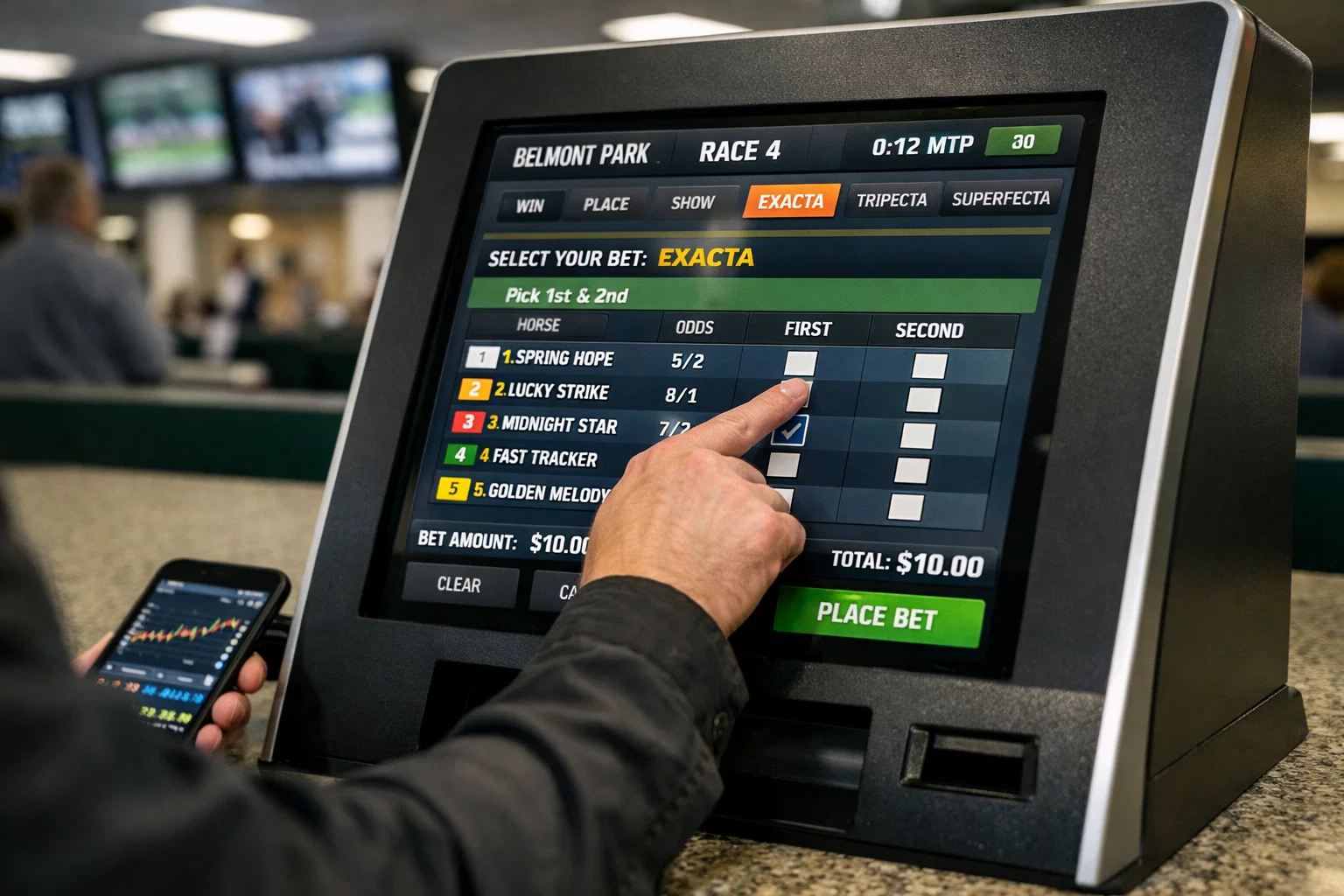
Defaulting to boxes when keyed or wheeled structures would be more efficient represents a persistent error among recreational bettors. Boxes treat all combinations as equally likely, investing the same amount on your favorite winning as on your longshot winning. When your handicapping indicates that one horse is substantially more likely to win than others in your selection group, a box structure wastes money on low-probability combinations.
Part-wheels align your investment with your opinions. If you believe Horse A will win and Horses B, C, and D will fight for place and show, a part-wheel with A on top, B/C/D in second, and B/C/D in third costs less than boxing all four while still capturing your predicted outcome. The savings from excluding unlikely combinations where B, C, or D beats A can be reinvested in higher base bets or additional races.
Key boxes offer a middle ground for situations where you have a strong win opinion but want flexibility in the underneath positions. Keying your top selection over a larger group for exactas, or keying your top two over a group for trifectas, maintains coverage while reducing cost compared to full boxes. Many professional exotic bettors rarely use pure boxes, preferring keyed and wheeled structures that reflect their actual handicapping opinions.
Learning when to use each structure requires practice and self-awareness about your own confidence levels. If you genuinely cannot separate your four selections in terms of win probability, a box is appropriate. If you clearly favor one or two horses to win, keyed structures make more sense. The goal is matching your betting structure to your handicapping conclusions rather than forcing your conclusions into a single betting format.
Study the complex pace analysis thoroughly.
