
Weather and Track Conditions for Box Betting
 Available in US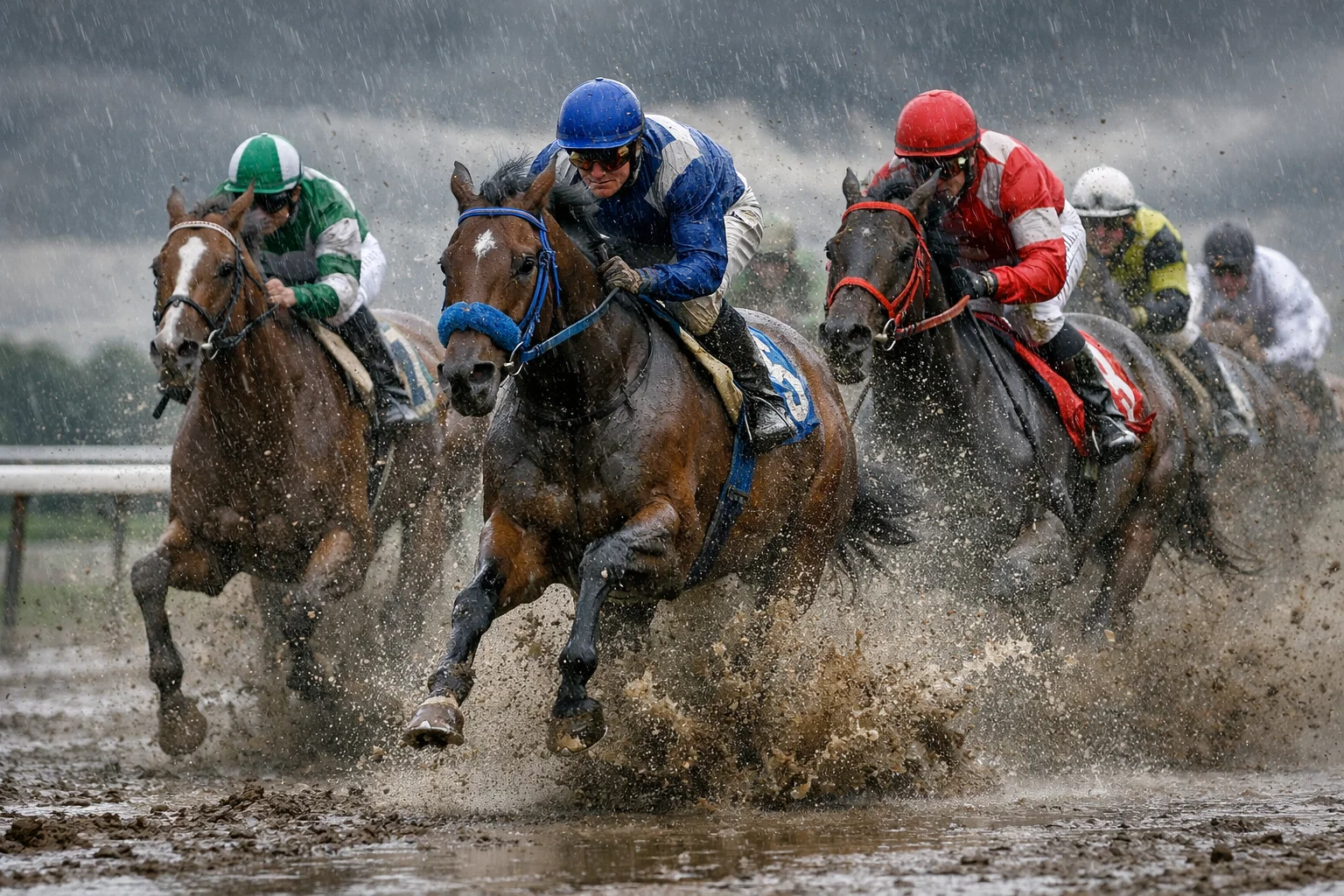
Weather conditions transform horse racing from a sport of pure ability into a tactical puzzle where environmental factors determine which horses thrive and which struggle. A horse that dominates on fast, dry tracks might founder when rain softens the footing, while a plodding closer suddenly becomes a threat when mud neutralizes the early speed that usually defeats it. Box bettors who ignore weather patterns consistently include horses unsuited to conditions while excluding horses whose past performances on similar surfaces predict today’s success.
Bet fundamentally smarter today via bookmakers-bet.
Track conditions in American racing are classified on a standardized scale that reflects moisture content and surface firmness. Fast indicates dry, optimal conditions on dirt. Good represents slightly softer footing. Muddy describes saturated tracks with standing water in some areas. Sloppy indicates significant water coverage across the surface. Heavy describes deep, holding conditions that test stamina. Each designation signals different requirements for successful horses, and understanding these distinctions informs which horses belong in your boxes.
The relationship between weather and box betting extends beyond simple track condition labels. Temperature affects equine performance, with some horses thriving in heat while others prefer cooler conditions. Wind direction alters pace dynamics by helping or hindering front-runners depending on which direction they face the breeze. Humidity influences stamina by affecting how efficiently horses cool themselves through sweating. Comprehensive weather analysis incorporates all these factors when constructing exotic tickets.
Table of Contents
Reading Track Conditions
Dirt tracks respond dramatically to moisture. A fast track provides firm, consistent footing that rewards pure speed and efficient stride mechanics. Horses with quick acceleration and high cruising speed typically dominate on fast surfaces because the footing supports their powerful movement without requiring additional effort to maintain traction. These conditions favor horses with established speed figures because the surface allows them to reproduce their best efforts.
As moisture increases, dirt surfaces become progressively softer and more demanding. Good tracks require slightly more effort with each stride as hooves sink marginally deeper into the surface. Muddy and sloppy tracks present significant challenges because horses must generate additional power to pull their hooves free from the holding surface while maintaining forward momentum. Stamina becomes paramount in these conditions as the extra effort accumulates over the course of the race.
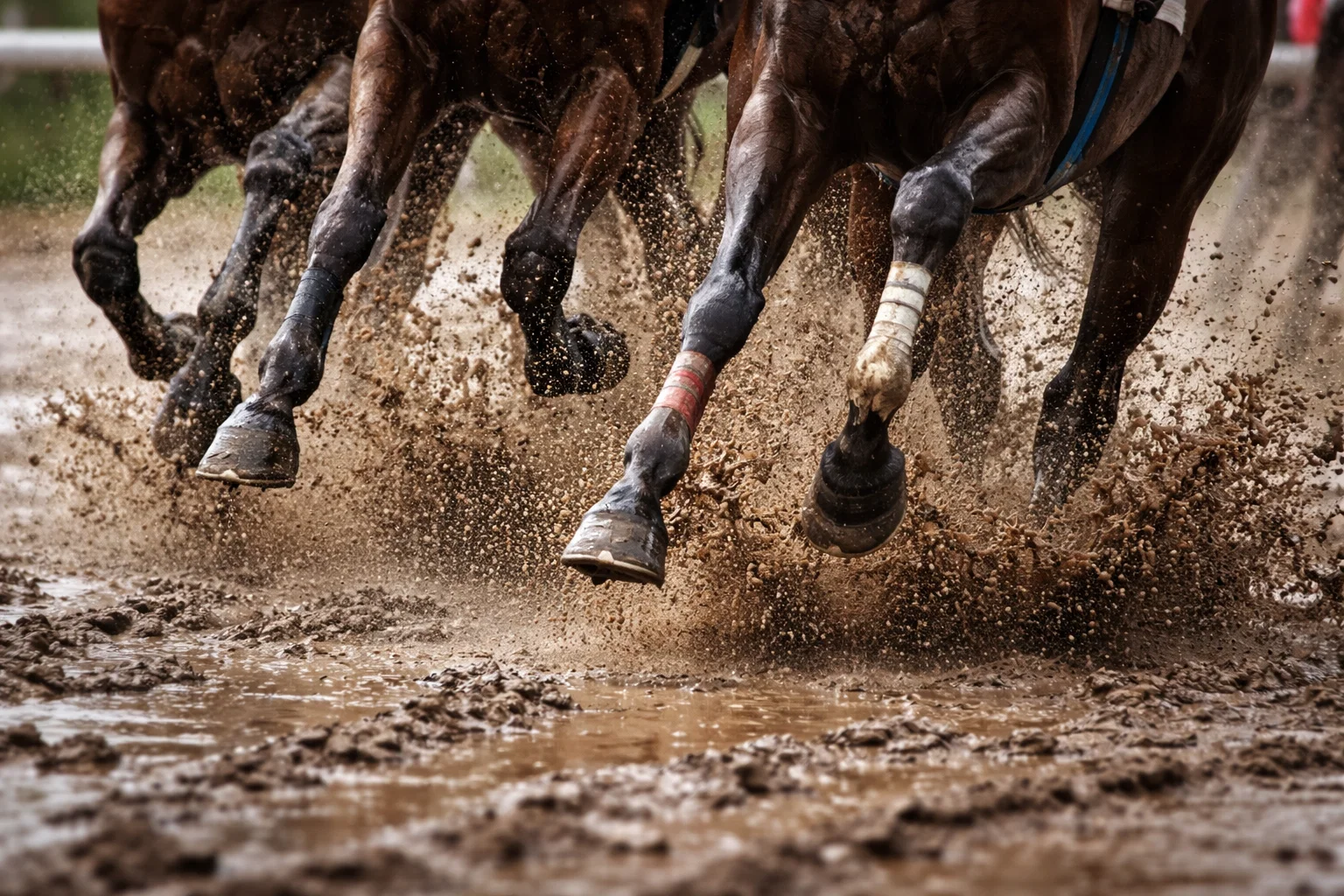
Some horses are bred and built for off-track conditions. Their conformation features powerful hindquarters that generate the pushing force needed to navigate heavy going. Their stride mechanics allow them to handle inconsistent footing without losing rhythm. Past performances often reveal these mudders through strong finishes on wet tracks combined with mediocre results on fast surfaces. Including confirmed mudders in your boxes when rain is expected or has fallen captures value that surface-blind bettors miss.
Conversely, some horses absolutely cannot handle moisture. They lose their action when footing becomes uncertain, either because their stride mechanics are unsuited to soft surfaces or because they mentally struggle with the unfamiliar feel beneath their hooves. These horses should be excluded from boxes on off tracks regardless of how impressive their fast-track form appears. A horse that earned a 95 Beyer on fast might run a 78 equivalent in the mud.
Turf Considerations
Turf racing presents its own weather sensitivities. Grass courses are classified as firm, good, yielding, or soft depending on moisture content. Firm turf provides fast, consistent footing similar to fast dirt. As moisture increases, turf becomes progressively more demanding, with soft turf testing stamina much like muddy dirt tests it.
European-bred horses often handle soft turf better than American-bred horses because European racing frequently occurs on yielding ground and breeding emphasizes stamina over pure speed. When American turf races come up soft, shippers or horses with European pedigrees may offer value because American bettors underestimate the importance of soft-ground breeding.
Turf courses can become so waterlogged that racing moves to the main dirt track for safety. This relocation dramatically affects betting because horses entered expecting turf conditions suddenly face dirt. Horses with turf-only form have no dirt figures to evaluate, creating uncertainty that can produce longshot exactas and trifectas when turf specialists struggle on the unfamiliar surface.
Monitoring weather forecasts before turf races allows proactive adjustment of your boxes. If rain is expected, weight your selections toward proven soft-ground horses even if their firm-ground figures appear inferior. If unexpected rain has already fallen, reconsider any boxes constructed under the assumption of good turf conditions.
Temperature and Seasonal Factors
Temperature affects equine performance in ways that past performances often reveal. Some horses train in warm climates and struggle when shipped to colder venues, their muscles slow to warm up and their bodies uncomfortable in unfamiliar conditions. Other horses train in cooler climates and wilt when racing in heat, their large bodies unable to efficiently dissipate the warmth generated during exertion.
Seasonal patterns in past performances often indicate temperature preferences. A horse whose best figures cluster in summer months may prefer warm conditions. A horse that improves dramatically in fall and winter may struggle in summer heat. These patterns become actionable when temperature on race day differs significantly from conditions during recent races.
Horses returning from winter layoffs often need one or two races to regain peak fitness. The first start back after a long break rarely produces the horse’s best effort because cardiovascular conditioning requires competitive racing to reach optimal levels. Including freshened horses in boxes requires confidence that they are fit enough to compete, which trainer patterns and workout reports help assess.
The racing calendar creates predictable seasonal patterns. Spring features returning older horses shaking off winter rust alongside fresh three-year-olds entering the picture. Summer brings peak fitness for established runners. Fall sees some horses tailing off after long campaigns while others peak for major fall stakes. Winter at warm-weather venues attracts shippers whose form may be unreliable in new surroundings. Understanding these seasonal dynamics informs box construction throughout the year.
Wind Effects
Wind alters pace dynamics in subtle but significant ways. Headwinds down the backstretch slow early fractions, benefiting closers who conserve energy while front-runners battle the breeze. Tailwinds down the homestretch help closers generate momentum during their rallies. Crosswinds create handling challenges that affect some horses more than others depending on their tolerance for environmental distraction.
Strong headwinds particularly affect front-runners who must break the wind while horses behind them draft in their wake. A front-runner who typically leads throughout might exhaust itself fighting the breeze and fade in the stretch. Meanwhile, closers waiting behind enjoy protection from the wind until they launch their rallies, then benefit from the headwind-slowed pace that brings them closer to the leaders entering the stretch.
Tailwinds can produce unusually fast fractions if they blow down the backstretch because front-runners ride the wind assistance during their early running. These fast fractions might not tire horses as much as expected because the wind reduced the effort required to achieve them. Box bettors should consider how wind direction interacts with track configuration when projecting pace scenarios.
Extreme wind conditions can cause race cancellations when safety concerns outweigh the desire to conduct racing. Even when races proceed, horses unfamiliar with strong winds may behave erratically, creating unpredictable results that favor wider exotic coverage. Include additional horses in your boxes on extremely windy days to account for the increased uncertainty.
Practical Application

Check weather forecasts as part of your handicapping routine. Understand what conditions are expected for each race and how those conditions compare to conditions during each horse’s recent races. Note which horses have demonstrated ability on similar surfaces and which have never faced comparable conditions.
Adjust your box selections based on expected conditions. When rain is forecast, include horses with proven wet-track form even if their dry-track figures appear modest. When heat is expected, favor horses whose best efforts came in summer months. When wind is significant, consider how it will affect pace and which running styles will benefit.
Review scratches that occur due to weather changes. When tracks turn up off, trainers often scratch horses unsuited to wet conditions, removing them from your handicapping consideration. The remaining field may look very different than what you anticipated when first reviewing the entries.
Weather creates betting value when the public fails to adjust for conditions. Casual bettors often play favorites based on recent form without considering whether today’s conditions suit that horse. You can gain edge by identifying horses whose form on today’s expected surface exceeds what their overall record suggests, and by excluding horses whose surface limitations make them poor bets regardless of their general ability.
Analyze the morning workouts box selection.
