
Integrating Factors for Optimal Box Construction
 Available in US
Effective box betting requires synthesizing multiple handicapping factors into coherent ticket construction. No single factor determines outcomes reliably enough to guide box selection independently. Speed figures provide objective performance measurement but miss contextual elements. Pace analysis projects how races unfold but cannot predict every tactical decision. Class evaluation positions horses within competitive hierarchies but ignores current form fluctuations. The successful box bettor integrates all relevant factors, weighing each appropriately for the specific race at hand.
Enjoy horse racing analysis with bookmakers-bet.
Integration does not mean treating all factors equally. Some races are determined primarily by pace dynamics; others are class tests where ability matters more than tactics. Some races feature horses with vastly different experience levels where workouts and pedigree guide selections; others feature established form horses where recent performances dominate. Recognizing which factors matter most for each race allows appropriate weighting that produces more accurate contender identification.
The goal is constructing boxes that capture horses most likely to fill the positions you are targeting while excluding horses whose finishing positions will fall outside your coverage. This requires honest assessment of each horse’s realistic range of finishing positions rather than wishful thinking about longshot possibilities or dismissive attitudes toward obvious contenders.
Table of Contents
Factor Hierarchy by Race Type
Maiden races featuring first-time starters demand emphasis on pedigree, workouts, and trainer patterns because no racing form exists. Sire statistics for debut winners, dam produce records, workout quality and progression, and trainer percentages with first-time starters become primary selection criteria. Horses with fast works from trainers who win with debutantes deserve box inclusion; horses with slow works from trainers who rarely win first out warrant exclusion.
Maiden races for horses with racing experience shift emphasis to form analysis. Recent speed figures, improvement or regression patterns, and response to trainer adjustments guide selection. A horse whose figures have improved across three starts suggests continued development; a horse whose figures have declined suggests deterioration. Include improving maidens in boxes; treat declining maidens skeptically.

Claiming races reward straightforward form analysis because horses are racing at established ability levels. Speed figures compare horses directly. Class drops and rises indicate trainer intent. Pace scenarios project which running styles will be advantaged. Weight these factors according to race specifics, emphasizing pace in races with obvious speed conflicts and class in races where horses are moving between levels.
Allowance races introduce more uncertainty because horses are still establishing their ceilings. Recent allowance winners stepping up face questions about whether their ability extends to higher levels. Horses retreating from stakes company may be talented types who found their limits or declining horses being protected. Evaluate each horse’s trajectory carefully when constructing allowance race boxes.
Stakes races demand attention to connections, proven class, and tactical factors. Elite trainers and jockeys elevate performance under pressure. Horses with graded stakes wins have demonstrated ability at the level. Pace scenarios often determine outcomes when closely matched fields engage tactically. Weight these stakes-specific factors when building boxes for major events.
Practical Integration Process
Begin each race by reading the conditions and identifying what type of race you are handicapping. Distance, surface, class level, and eligibility conditions establish the context for factor weighting. A turf sprint for non-winners of two demands different analysis than a dirt route stakes for older horses.
Identify the pace scenario by examining the running styles and early speed figures of all entrants. Project whether the race will feature a speed duel that benefits closers, a lone speed situation that benefits front-runners, or a moderate pace that allows tactical versatility. Note which horses fit the projected scenario favorably.
Evaluate each horse’s form within the context you have established. Compare speed figures adjusted for pace scenario. Assess class movements relative to demonstrated ability. Note trainer patterns relevant to today’s situation. Identify trip factors from recent races that might cause improvement or regression.
Build your contender list by including horses whose combined factors suggest competitive finishes. Start with horses who stand out across multiple factors, then add horses with compelling single-factor advantages if the race warrants expanded coverage. Exclude horses whose factors collectively suggest non-competitive performance.
Construct your ticket by translating your contender assessments into appropriate box structures. Key horses you believe most likely to win. Include horses you believe likely to finish in the money but less likely to win in secondary positions. Exclude horses outside your realistic assessment of competitive finishes.
Weighting Conflicts
Conflicting factors create the most challenging integration decisions. A horse might show the best speed figure but face an unfavorable pace scenario. Another might have ideal class credentials but poor recent workouts. Resolving these conflicts requires judgment about which factors will prove most determinative for the specific race.
When pace and figures conflict, consider whether the pace projection is confident or uncertain. If multiple speed horses guarantee a hot pace, the pace factor probably dominates. If the pace scenario depends on tactical decisions that could go either way, figures may prove more reliable.
When class and form conflict, consider the direction of class movement and the recency of form. A class dropper with mediocre recent form might be better than recent form suggests because the form came against tougher competition. A class riser with good recent form might be worse than recent form suggests because the competition strengthens at the new level.
When connections and figures conflict, consider the level of racing and the magnitude of the connection advantage. Elite jockeys on marginal figures might overcome the deficit in minor races but probably cannot overcome it in major stakes. Trainer patterns that show 30% win rates in specific situations warrant respect even when figures look modest.
When multiple horses present similarly compelling cases across different factor combinations, spread your coverage rather than making forced choices. The race may genuinely be competitive among several horses, making expanded boxes more appropriate than narrow bets on arbitrary picks.
Context Sensitivity
The same factors carry different weights across different racing environments. Speed figures generated at major tracks with deep competition mean more than figures from minor tracks with thinner fields. Trainer patterns from current seasons mean more than patterns from years past. Recent form means more than distant form. Weight factors according to their contextual relevance.
Surface and distance changes alter which historical form matters. A horse switching from dirt to turf has limited relevant form regardless of how many dirt races it has run. A horse stretching from sprints to routes may have figures that do not translate to the new distance. Adjust factor weights when horses are trying something new.
Seasonal factors affect form reliability. Horses returning from layoffs often improve through their first few starts of a campaign. Horses at the end of long campaigns may be tiring regardless of what their figures suggest. Horses training through winter at southern tracks may have an edge over horses shipping from cold climates. Weight seasonal factors when they apply to contender assessment.
Track-specific biases affect which factors prove predictive. A track with strong inside bias makes post position more important than at neutral tracks. A track with speed-favoring surfaces makes pace projection more critical. A track with soft turf makes grass pedigree more relevant. Incorporate venue-specific factors into your integration process.
Continuous Improvement
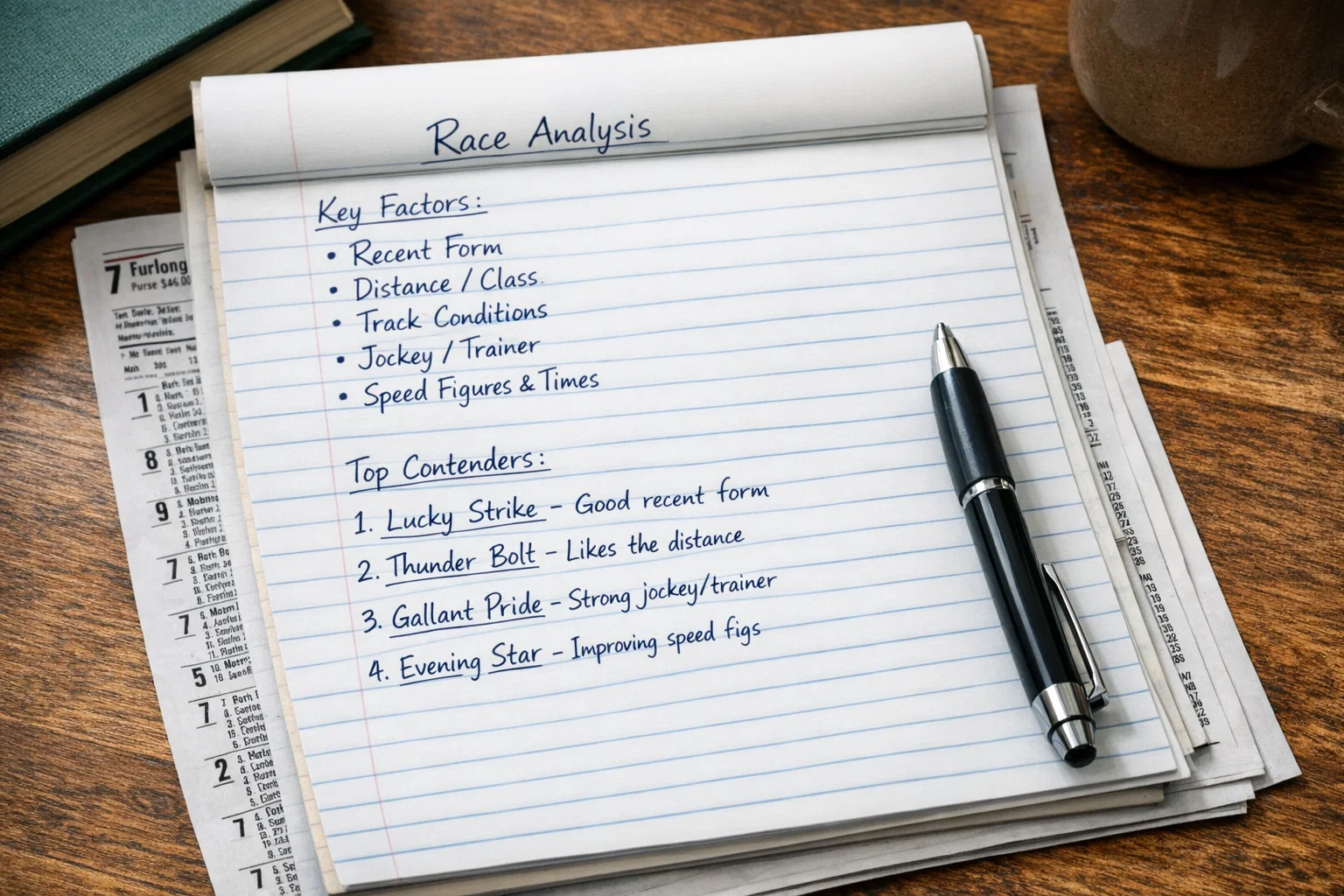
Integration skill develops through practice and honest review. After each race, evaluate which factors you weighted correctly and which you misjudged. Did pace unfold as projected? Did class tell as expected? Did form horses perform to figure? These post-race assessments guide improvement in future integration decisions.
Track your accuracy by factor to identify systematic strengths and weaknesses. If your pace projections consistently prove accurate but your class assessments frequently miss, focus improvement efforts on class evaluation. If your stakes race analysis produces results but your maiden race analysis struggles, emphasize maiden race study.
Remain open to adjusting your integration approach as you learn. What works in one racing environment may not transfer to another. What worked last year may not work this year as the game evolves. Continuous learning and adaptation keep your integration process current and effective.
The integration of multiple factors into coherent box construction represents the culmination of handicapping skill. Each individual factor provides partial information; their thoughtful combination provides actionable insight. Developing this integration capability distinguishes competent box bettors from those who rely on single factors or random selection.
Browse our fantastic latest articles online.
