
Morning Line vs. Actual Odds: Finding Value in the Gap
 Available in US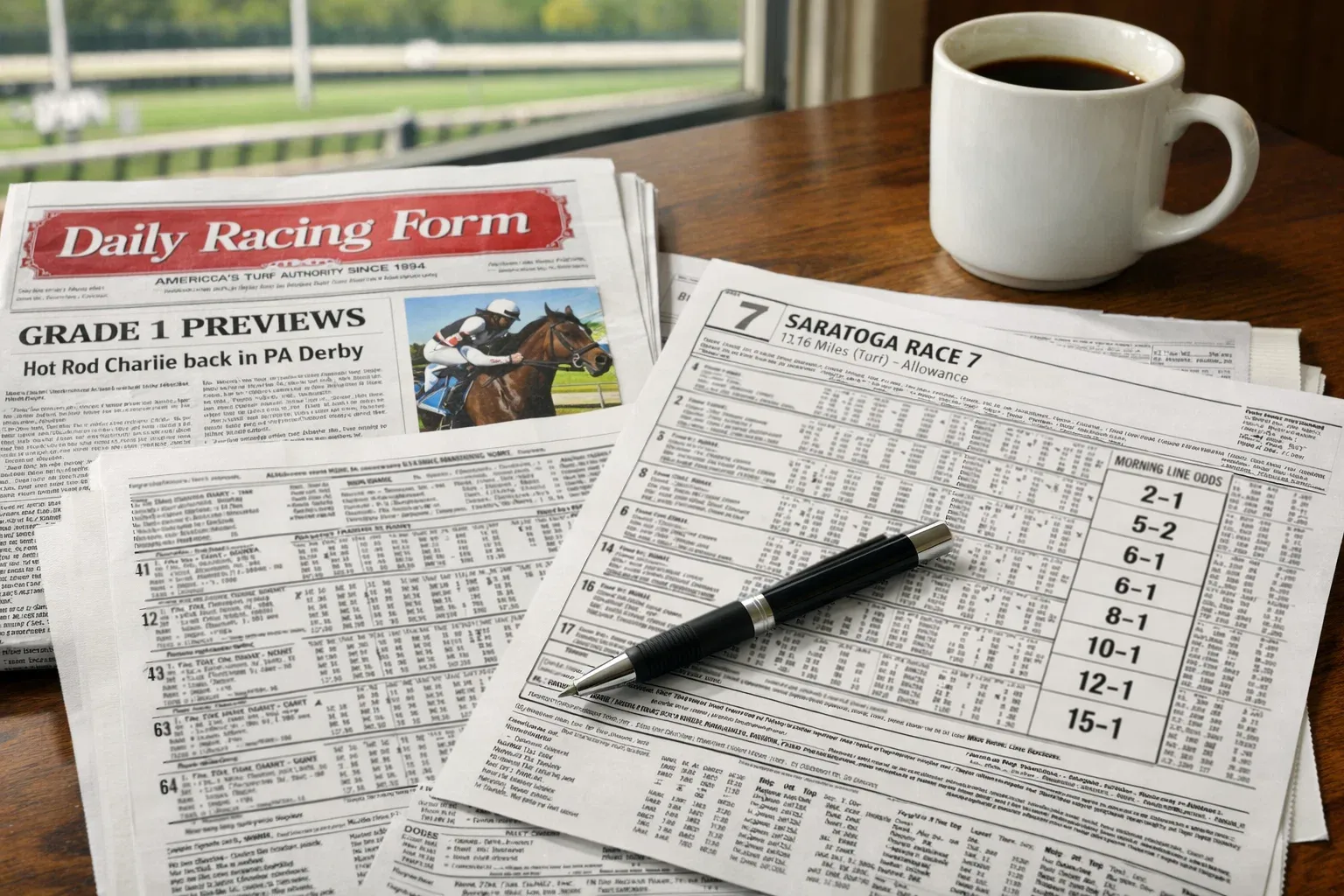
The morning line serves as horse racing’s first guess at how the betting public will distribute its money, published in programs and past performance sheets before wagering opens. A track handicapper creates these odds not to predict winners but to estimate where the money will flow. Understanding the distinction between morning line odds and actual post-time odds reveals opportunities that escape casual bettors who treat the morning line as gospel rather than the rough estimate it actually represents.
When morning line odds and actual odds diverge significantly, one of two things has occurred: either the morning line maker misread public sentiment, or the betting public has received information or formed opinions that differ from the handicapper’s expectations. Both scenarios create value opportunities for attentive exotic bettors. A horse listed at 10-1 on the morning line but drifting to 20-1 in actual betting might be a forgotten contender worth including in your boxes. A horse at 6-1 on the morning line but attracting heavy action down to 5-2 might be receiving insider support that validates its chances.
The key insight for box betting is that morning line odds help you construct your initial universe of contenders, while actual odds help you evaluate value once you have identified your horses. A five-horse trifecta box costs $60 regardless of whether those horses end up 3-1 or 15-1, but the potential payout depends entirely on where the actual odds settle. Using both lines strategically maximizes your probability of selecting the right horses at the right prices.
Table of Contents
How Morning Lines Are Made
Morning line makers face an unusual challenge: predicting crowd behavior rather than race outcomes. A skilled oddsmaker might believe Horse A will win but still install Horse B as the morning line favorite because the public profile of Horse B, perhaps a recent stakes winner for a famous trainer, guarantees heavy betting support. The morning line reflects anticipated betting patterns, not the oddsmaker’s personal selections.
The mathematics of morning line construction require that all odds balance to approximately 120-125 percentage points when converted to implied probabilities plus takeout. This constraint forces oddsmakers to spread probability across the entire field in a way that reflects expected betting distribution. A seven-horse field cannot have three horses at 2-1 because the math simply does not balance. The constraints of the format mean morning lines always contain some compression at both extremes: favorites rarely go below 8-5, and longshots rarely exceed 30-1, even when actual betting will produce more extreme prices.
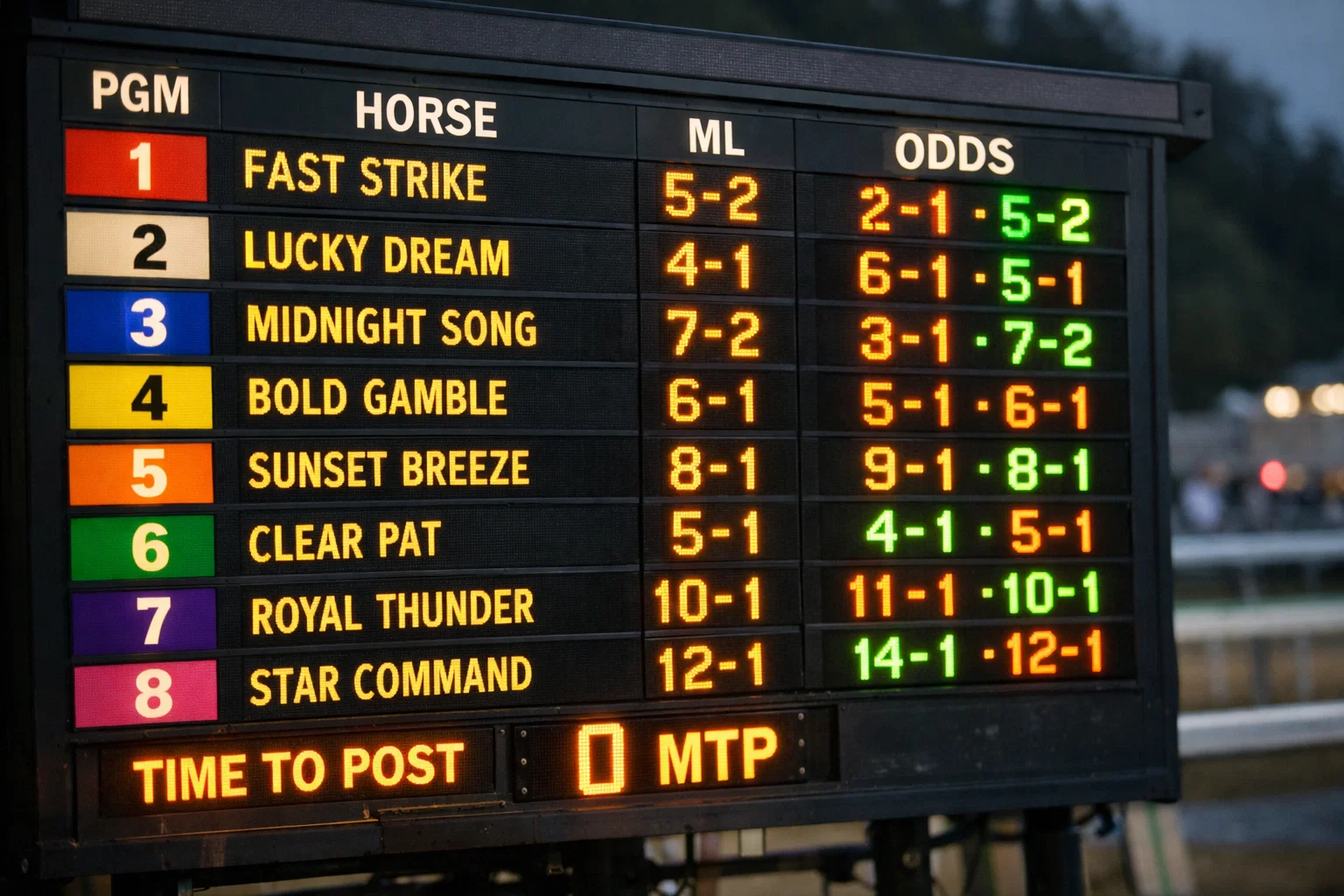
Time constraints affect morning line accuracy. Oddsmakers typically create lines within hours of race entries being drawn, sometimes days before the actual race. Last-minute jockey changes, workout reports, surface switches for turf races, and other developments cannot be incorporated into morning lines but definitely affect actual betting. A horse listed at 8-1 might balloon to 20-1 if the stable’s first-call rider opts for a different mount, or might crash to 3-1 if a top jockey signs on at the last minute.
Track-specific tendencies influence morning line construction as well. Oddsmakers at major tracks with sophisticated betting populations tend to produce more accurate lines than those at smaller circuits where local knowledge and stable money can move markets dramatically. California and New York morning lines typically align closely with actual odds, while regional tracks show wider variance between predicted and actual prices.
Interpreting Line Movement
When a horse’s actual odds drift higher than the morning line, the market is signaling reduced confidence. This drift might reflect legitimate concerns: perhaps the horse looked dull in the paddock, or the trainer’s recent form has declined, or the surface conditions do not suit the horse’s style. But drift can also create value when the public overreacts to superficial factors or simply overlooks a contender amid more glamorous alternatives.
The extreme drift scenario, where a horse moves from 6-1 morning line to 15-1 or 20-1 in actual betting, demands investigation. Check whether the horse is fit and ready by reviewing recent workouts. Examine whether a jockey change has occurred that might explain the abandonment. Consider whether track conditions have shifted in ways that disadvantage this runner. If no fundamental explanation exists, you may have found a live longshot that the crowd has simply ignored.
When actual odds compress below the morning line, money is flowing to that horse beyond what the oddsmaker anticipated. This compression often reflects smart money, wagers from connections, professional bettors, or others with information unavailable to the general public. A horse dropping from 8-1 morning line to 3-1 actual odds has attracted significant support that deserves respect. Including such horses in your exotic combinations acknowledges that someone with knowledge believes this horse will run well.
Extreme compression warrants caution about value. A horse plunging from 12-1 to 4-1 might well win, but the potential payout has been dramatically reduced by all the money that pushed the price down. The same trifecta combination pays half as much when your key horse is 4-1 versus 12-1. Compression improves your hit rate but reduces your average return, a trade-off to evaluate based on your overall exotic strategy.
Practical Value Identification
The systematic approach to finding value compares your own fair odds assessment to both the morning line and actual odds. Before looking at any line, handicap the race and assign your own probabilities to each horse. Convert those probabilities to odds: a horse you believe has a 20% chance of winning should be approximately 4-1 in your estimation. Then compare your number to the morning line and actual odds.
When your assessment matches the morning line but actual odds show significant drift, you have potentially found value that the crowd has created. Your handicapping agrees with the professional oddsmaker, yet the public has pushed the price higher than both of you expected. These situations offer overlay opportunities where you are getting paid more than the true probability warrants.
When your assessment differs from the morning line but actual odds move toward your number, the market is validating your handicapping. The morning line maker got it wrong, but the betting public is correcting the error. These situations confirm that your analysis has merit, even if the price is less generous than if the crowd had not caught up.
The most dangerous situation involves your assessment matching actual odds that differ from the morning line. Here, your handicapping agrees with the crowd but not with the professional. Neither the crowd nor you may be right: the oddsmaker might have seen something both parties missed. Proceed with caution when your analysis merely confirms public sentiment without independent validation.
Application to Exotic Betting
For box constructions, morning line and actual odds comparison helps determine whether to include or exclude specific horses. A horse drifting from 5-1 to 12-1 might deserve a spot in your trifecta box because the generous price cushions your cost if that horse fills a minor placing. A horse compressing from 10-1 to 3-1 might warrant exclusion because the reduced payout no longer justifies the probability weight you must assign to combinations involving that horse.
The value proposition of exotic betting lies in finding combinations that pay more than their true probability suggests they should. Morning line comparison helps identify which horses are likely to produce overlaid combinations. If your handicapping identifies Horse A as a legitimate win contender at fair odds of 6-1, but actual betting shows 12-1, trifecta combinations with A on top will pay roughly double what they should based on true probability. These are precisely the combinations to emphasize in your ticket construction.
Part-wheel structures benefit from odds analysis because you can weight positions based on value rather than raw probability. If you have three horses you like equally for the win position but one is 8-1, one is 5-1, and one is 3-1, the 8-1 horse offers the most value if your win-probability assessments are equal. Keying the longest-priced contender on top maximizes potential payout when your top selection performs.
For exacta betting specifically, odds comparison reveals which finish orders offer superior value. The exacta with your 10-1 selection over the 3-1 second choice pays dramatically more than the reverse with the 3-1 on top. If your handicapping gives both horses similar place probabilities, you should weight your investment toward the higher-paying arrangement, perhaps a $3 exacta on the longer price over the shorter price and only $1 on the reverse.
Building Your Own Line

Advanced handicappers create their own fair odds lines before checking any published odds. This discipline prevents contamination from morning line anchoring, the psychological tendency to let published odds influence your assessment. When you build your own line first, you generate an independent evaluation that serves as a baseline for value comparison.
The mechanics of line construction require probability assignments that sum to approximately 115-120% to account for takeout. Start by identifying the horse you consider most likely to win and assign a percentage. Move through the field assigning percentages that reflect your true beliefs about each horse’s chances. When finished, check that your total approximates the target range and adjust if necessary.
Compare your personal line to the morning line to identify discrepancies. Horses where you and the oddsmaker disagree significantly warrant additional scrutiny. Either you have spotted something the professional missed, or the professional knows something you do not. Investigating these discrepancies sharpens your handicapping and reveals whether your contrarian view has merit.
Track your personal line accuracy over time by recording your fair odds alongside actual results. Did the 4-1 horse on your line win at roughly the 25% rate implied by those odds? Did your 15-1 shots hit approximately 7% of the time? This calibration reveals whether your probability assessments match reality, allowing you to adjust future estimates and improve the reliability of your value identification process.
The disciplined use of morning line comparison transforms exotic betting from guesswork into structured analysis. The gap between what the oddsmaker predicted and what the crowd actually bet reveals information about market sentiment, information flow, and betting value. Capturing this information and incorporating it into your box constructions gives you an edge over bettors who either ignore odds entirely or accept them uncritically as measures of true probability.
