
Using Speed Figures to Select Box Contenders
 Available in US
Speed figures provide the most objective foundation for identifying which horses belong in your exotic boxes. While other handicapping factors require subjective interpretation, speed figures offer a standardized measure of how fast each horse has run under comparable conditions. A horse with a 92 Beyer Speed Figure ran objectively faster, after adjustment for track conditions and distance, than a horse with an 85. This quantifiable difference helps separate genuine contenders from pretenders whose form might look impressive but whose raw speed falls short.
Master the odds perfectly with bookmakers-bet.
The challenge for box bettors lies in translating speed figure analysis into practical selection decisions. Simply boxing the four horses with the highest last-race figures produces disappointing long-term results because the approach ignores form cycles, class levels, distance preferences, and the relationship between figures and likely odds. Smart speed figure handicappers use the numbers as a starting point for analysis rather than an ending point, integrating figure patterns with other factors to identify horses whose actual ability exceeds public perception.
Speed figures work particularly well for exotic betting because they help predict which horses will occupy the top three or four finishing positions regardless of exact order. A horse whose best figures cluster around 88-92 may not beat one whose figures regularly hit 95-98, but both horses should finish ahead of those topping out at 78-82. This hierarchy allows box construction based on figure ranges rather than precise ordering, which aligns perfectly with how boxes function.
Table of Contents
Understanding Figure Ranges
Beyer Speed Figures, the most widely published and referenced speed figures, operate on a scale where higher numbers indicate faster performances. Elite stakes horses run in the 100-110 range, with exceptional performances reaching 115-120. Solid allowance horses typically earn figures in the 85-95 range. Maiden special weight winners at major tracks run in the high 70s to mid-80s. Claiming horses vary widely based on claiming price, with bottom-level runners posting figures in the 50s and 60s.
These ranges provide immediate class context. When a horse dropping from allowance to claiming level shows recent figures of 88-92, it holds a substantial figure advantage over typical claimers running 72-78 figures. This class edge often translates to improved finishing position even if the dropper does not win. Including such horses in your boxes captures the probability that superior speed will carry them into the money.
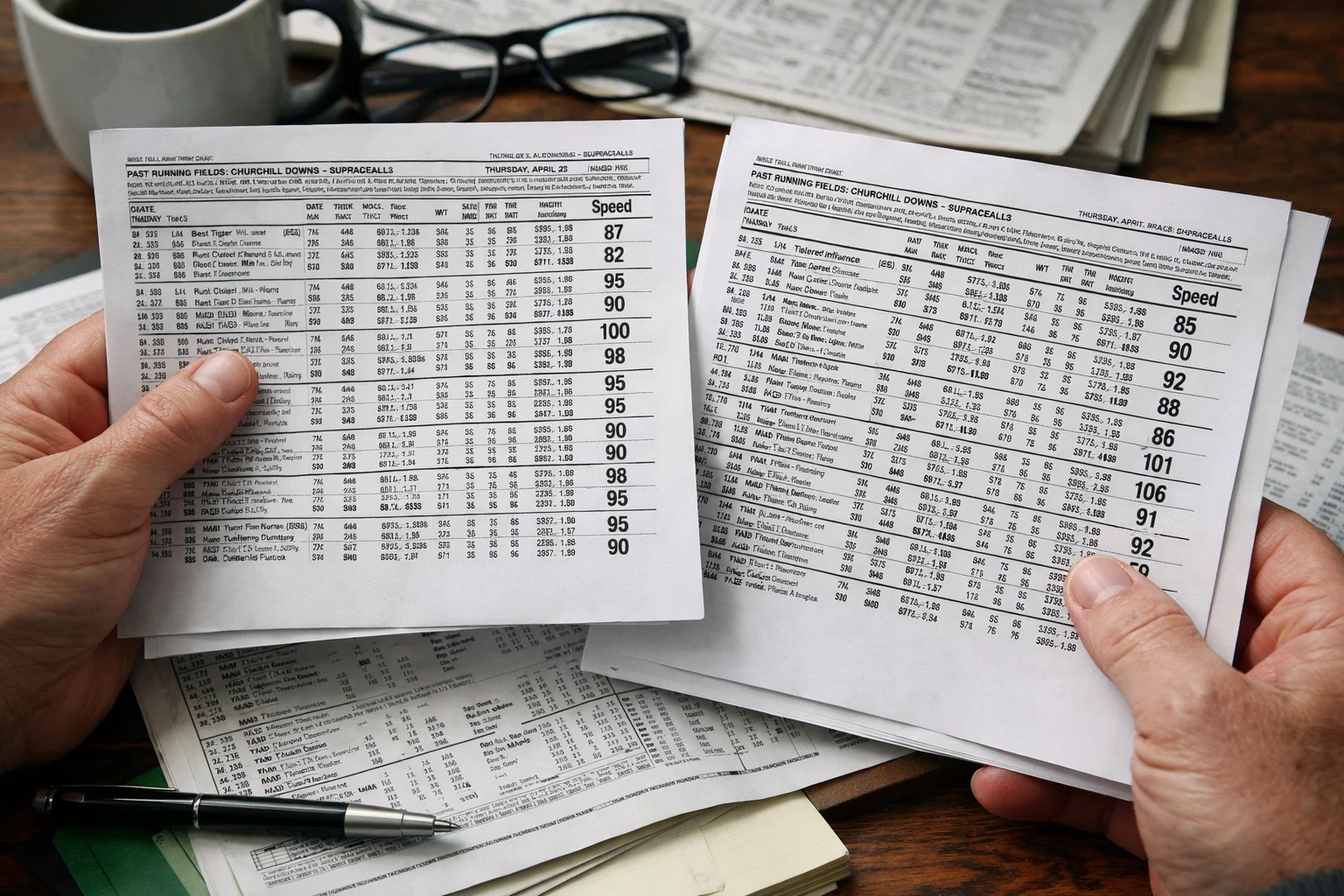
Within any given race, figure spreads reveal competitive dynamics. A race where the top four horses show recent figures of 89, 87, 86, and 84 presents a different challenge than one where figures read 95, 88, 82, and 75. The compressed-figure race requires broader box coverage because any of the four might win. The spread-figure race suggests a narrower box focused on the top two, with the third position potentially going to either of the lower-figure horses but unlikely to produce an upset winner.
Recent figures matter more than lifetime bests for current form assessment. A horse who earned a 95 eight months ago but has run 82-84 in recent starts is not a 95-figure horse today. Use the last three to four races as your primary sample, noting whether figures are trending upward, holding steady, or declining. Horses on the improve, showing incrementally better figures in successive starts, deserve box inclusion even if their current figure falls slightly below others in the field.
Figure-Based Selection Process
Begin your box selection by establishing a figure par for the race, which represents the typical winning speed for horses at this class level at this track. Daily Racing Form publishes par figures, or you can derive them from reviewing recent similar races. If the par for today’s $25,000 claiming sprint is 78, horses with recent figures near or above 78 are likely contenders while those running 70-72 figures face an uphill battle.
Identify all horses within five points of the highest recent figure in the field. This group constitutes your primary contenders for any box construction. In a ten-horse field where the top figure is 88 and three other horses have run 84-86 recently, these four horses form your core selection pool. Horses with figures of 79 or below would need other significant advantages to overcome the speed deficit.
Evaluate whether any lower-figure horses show patterns suggesting imminent improvement. Second-time starters who ran respectable debut figures often improve dramatically in their second outing. Horses returning from layoffs sometimes need one race to regain sharpness and can bounce forward significantly in their second start back. Horses stepping down in class might run figures consistent with their new level that exceed their recent performances at higher class. These improvers warrant consideration for box inclusion despite figures that appear inferior on face value.
Examine the circumstances behind each figure. A horse who earned an 85 while racing wide into a headwind on a closing-biased track actually ran faster than that figure suggests. A horse who posted an 85 on the front end of a speed-favoring track with a tailwind benefited from conditions that inflated the number. Trip notes and race replays reveal which figures reflect true ability and which were enhanced or diminished by circumstances beyond the horse’s control.
Integrating Figures with Form
Speed figures alone do not capture everything relevant to box selection. A horse with superior figures who shows declining form, evidenced by worsening finishes and deteriorating running lines, may be past peak performance despite still posting competitive numbers. Conversely, a horse with modest figures who shows improving form through stronger finishes and more professional racing style may be ready to run a breakthrough figure.
Class transitions complicate figure interpretation. Horses dropping in class often run faster figures at the lower level because they face less talented competition and experience less traffic trouble. First-time droppers are particularly dangerous because their figure potential at the new level is unknown. Including these horses in your boxes accounts for the probability that reduced competition will unlock better performance.
Horses stepping up in class present the opposite challenge. A horse who dominated $16,000 claimers with figures of 82-84 now faces $25,000 claimers whose par is 78-80. On figures alone, this horse appears competitive. But the step up in class means facing horses with more tactical speed, better acceleration, and more professional racing patterns. The figure advantage may evaporate when confronted with this improved competition.
Distance changes affect figure reliability. A sprinter stretching out to route distances for the first time has no route figures to evaluate. You must project from sprint figures whether the horse possesses the stamina to maintain speed over the longer distance. Some handicappers adjust sprint figures downward by three to five points when projecting route performance for horses lacking route experience. Similarly, routers shortening to sprints may need adjustment because their route figures do not capture pure early speed.
Practical Box Applications
For exacta boxes, focus on the three or four horses with the best recent figures, weighted toward those whose figures were earned under similar conditions to today’s race. A four-horse exacta box at $24 captures most scenarios when your four selections show figures clearly superior to the remainder of the field. If figures are tightly bunched with five or six horses separated by just two or three points, you may need to either expand to a five-horse box or use a keyed structure to manage cost.
Trifecta boxes require figure analysis extended to identify probable third-place finishers. Some horses consistently run figures sufficient for minor placings but lack the extra gear to win or place. These professionals, who reliably run their figure without significant improvement, deserve inclusion in the third position of part-wheel constructions even if excluded from win and place positions. A part-wheel with two horses in first, three in second, and four in third reflects different confidence levels based on figure analysis.
Superfecta boxes benefit from identifying horses whose figures suggest fourth-place potential. At the ten-cent minimum, including a wider range of horses becomes affordable. Use figures to establish a floor: any horse whose recent figures fall more than eight to ten points below the field leader lacks the speed to finish in the top four under normal circumstances. Exclude these horses and construct your superfecta from the remaining field.
Multi-race exotics like Pick 3 and Pick 4 sequences require applying figure analysis across multiple races. Identify the one or two races where figure separation clearly defines contenders, allowing you to single or use just two horses. In races with compressed figures, spread more widely to account for the genuine uncertainty. This selective approach manages ticket cost while maintaining coverage in competitive legs where any of several horses might win.
Use special bets by position.
Speed figures provide the handicapping foundation upon which box betting success is built. They tell you which horses have demonstrated the speed to compete and which have not. Combined with form analysis, class evaluation, and pace projection, figures enable confident box construction that captures genuine contenders while excluding those who lack the raw ability to finish in the money regardless of other factors in their favor.
