
Pool Size and Liquidity: When to Box Big
 Available in US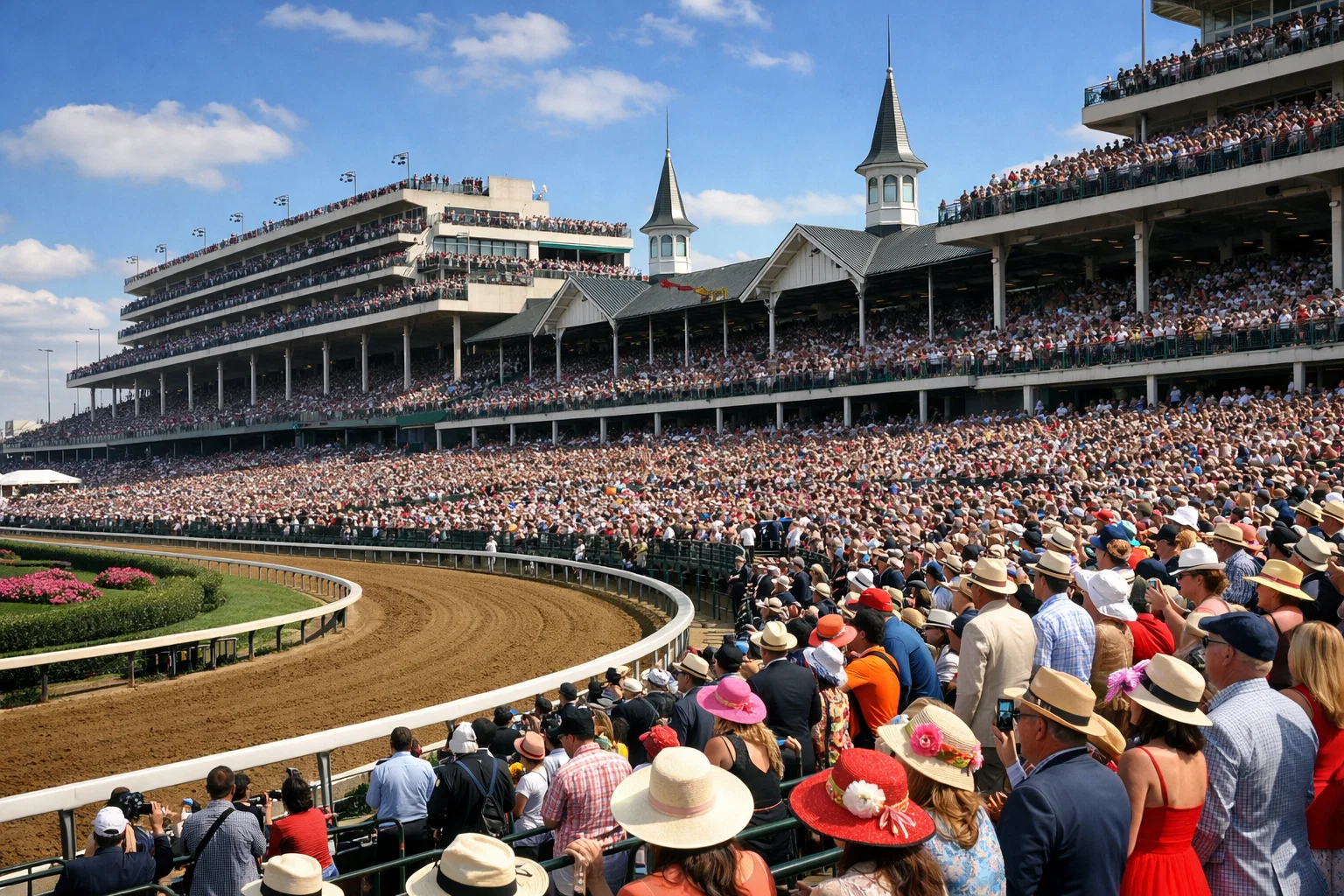
The pari-mutuel betting system that governs horse racing exotic wagering means your payout depends not on fixed odds but on the total money wagered and how it distributes across winning and losing tickets. Pool size, the aggregate amount bet into any given exotic pool, directly affects both the potential payout magnitude and the stability of those payouts. Understanding pool dynamics transforms box betting from gambling into a more calculated investment where you can identify situations that justify larger wagers and avoid traps where the math works against you.
Take fewer financial risks using bookmakers-bet.
Large pools offer several advantages that small pools cannot match. The most obvious is payout potential: a million-dollar trifecta pool can generate five-figure payouts on longshot combinations because there is simply more money to distribute. A $50,000 trifecta pool at a smaller track caps potential payouts at much lower levels regardless of how unlikely your combination appears. Beyond raw size, large pools provide better liquidity, meaning your bets have minimal impact on the final odds and payouts you receive. In a small pool, a $100 box might represent a meaningful percentage of total wagering, compressing your own payout by adding weight to your combinations.
Smart exotic bettors treat pool size as a key variable in their decision-making process. They allocate larger portions of their bankroll to races with substantial pools and reduce exposure in thin-pool situations where the payout math becomes unfavorable. This selective approach maximizes expected value over time by concentrating investment where the reward structure best compensates for the difficulty of exotic wagering.
Table of Contents
Pool Size Indicators
Several factors predict whether a race will generate a substantial exotic pool. Major stakes races attract the heaviest betting action, with Grade 1 events at tracks like Churchill Downs, Saratoga, Del Mar, and Keeneland routinely generating trifecta pools exceeding $500,000 and superfecta pools above $300,000. The Kentucky Derby represents the extreme case, with its trifecta pool typically surpassing $5 million and its superfecta pool exceeding $3 million. These massive pools justify aggressive box constructions that would be foolish in smaller-pool environments.
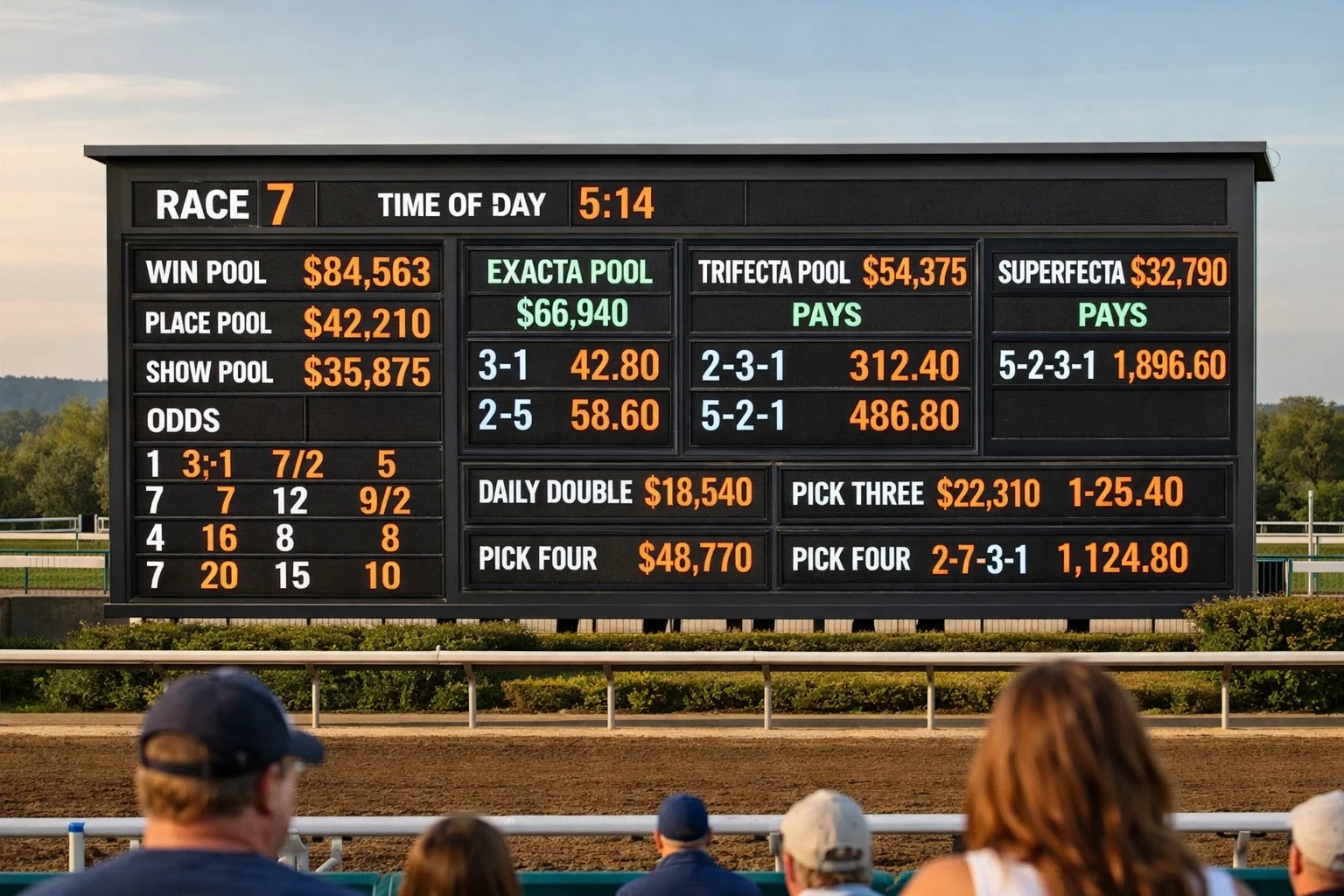
Track reputation and location influence pool sizes for non-stakes races as well. New York racing at Belmont Park and Aqueduct consistently generates larger pools than equivalent class races at regional tracks. California racing at Santa Anita and Del Mar attracts significant handle. Florida racing at Gulfstream Park benefits from its role as a winter destination for horseplayers. Afternoon races at these venues typically produce trifecta pools of $75,000 to $200,000, sufficient to generate meaningful payouts without requiring the astronomical longshots necessary at smaller tracks.
Day of week affects pool sizes predictably. Saturday racing generates larger pools than weekday racing at the same tracks. Holiday racing attracts recreational bettors who inflate pools without necessarily improving pool efficiency. Major racing days, such as Breeders’ Cup Saturday, Kentucky Derby day, and Belmont Stakes day, draw national attention and produce pools that dwarf normal racing.
Card position matters as well. Featured races on any card attract more betting action than early-card maiden claimers or late-card bottom-level races. Many tracks structure their cards with a featured stakes or allowance race in the mid-to-late afternoon to capitalize on peak attendance and simulcast interest. These races typically generate the day’s largest exotic pools and represent the best opportunities for box betting.
The Mathematics of Pool Size
Pool size affects your payout through a simple mechanism: the track deducts its takeout percentage, and the remaining money distributes among winning tickets. Larger pools mean more money to distribute even after the same percentage takeout. The practical effect is that large-pool exotic wins feel substantial while small-pool wins can be disappointing relative to the difficulty of prediction.
Consider two identical trifecta results at different pools. Your combination of a 5-1 winner over an 8-1 second-place finisher over a 12-1 third-place finisher hits in both races. In a $500,000 trifecta pool with 20% takeout, the pool distributes $400,000 to winners. If your combination attracted $2,000 in total bets, the payout calculates to $200 per $1 unit ($400,000 / $2,000). Your $10 box returns $2,000. In a $50,000 pool at a smaller track, the same proportional betting pattern yields a $40,000 distribution pool. If your combination attracted $200 in bets, the payout is still $200 per $1, but the smaller absolute pool means fewer dollars won in total. The math appears equivalent, but large pools offer more consistent payouts because they are less subject to distortion from individual large bets.
The stability advantage of large pools becomes apparent when considering how single bettors can move markets. In a $50,000 trifecta pool, a $500 bet on a specific combination represents 1% of the entire pool and noticeably compresses the payout for that combination. In a $500,000 pool, the same $500 bet represents only 0.1% of the pool, barely registering in the probable payouts. Large pools absorb your bets without self-defeating payout compression.
When to Increase Box Size
The combination of large pools and competitive fields creates optimal conditions for aggressive box constructions. When trifecta pools exceed $200,000 and the race features ten or more horses with reasonable chances, expanding your boxes to five or six horses becomes justifiable because the potential payouts can absorb the increased cost while still delivering profitable returns.
Carryover situations present special opportunities for larger boxes. When Pick 4, Pick 5, or Pick 6 sequences fail to produce winners, the unclaimed portion rolls into the next day’s pool. These carryovers attract additional betting interest, creating super-sized pools that can justify ticket costs that would be foolish under normal circumstances. A $200,000 Pick 4 carryover might attract another $400,000 in new betting, creating a $600,000 pool that turns marginal plays into potential value opportunities. Monitoring carryover situations and adjusting your multi-race exotic approach accordingly is a key skill for serious exotic bettors.
Major racing events warrant larger-than-normal box investments simply because the pools support meaningful returns even on chalky results. A Kentucky Derby trifecta box that hits with the first three favorites might still pay $200 for a $1 unit because the massive pool compensates for the predictable result. The same favorites sweeping a maiden claimer at a regional track might pay only $35, nowhere near justifying a five-horse box cost.
Mandatory payout days, when tracks distribute entire carryover pools regardless of whether anyone hits the winning combination, create exceptional box opportunities. The inflated pools available only on these designated days can support box costs that would be negative-expected-value on regular racing days. Identifying mandatory payout opportunities in Pick 6 and other carryover pools allows strategic deployment of your annual exotic budget on the days when pools best reward aggressive coverage.
When to Reduce Box Size
Small pools demand conservative box constructions because the payout math cannot support expensive tickets. A $30,000 trifecta pool limits the maximum possible payout to approximately $24,000 after takeout, and that maximum would require a single $1 ticket hitting an extremely unlikely combination. More realistic results in small pools pay double or triple digits, making expensive boxes unprofitable even when they win.
Afternoon cards at smaller tracks, particularly weekday cards with limited simulcast interest, typically generate trifecta pools under $50,000. In these situations, three-horse boxes at $6 or four-horse boxes at $24 represent the upper limit of sensible investment. The potential payouts simply cannot justify the $60 or $120 cost of larger boxes under these pool conditions.
Late-race pools often shrink as recreational bettors depart and only dedicated horseplayers remain. A featured stakes race might generate a $150,000 trifecta pool, but the final race on the same card might attract only $25,000. Adjusting your box strategy as you move through the card preserves bankroll for situations where the payout math works in your favor.
Small-field races compound the small-pool problem. A five-horse field at a minor track might generate a trifecta pool of only $15,000. Even if you hit an unlikely combination, the payout ceiling limits your return. Reserve your larger boxes for large-field races at major tracks where both combination counts and pool sizes support aggressive coverage.
Practical Pool Assessment
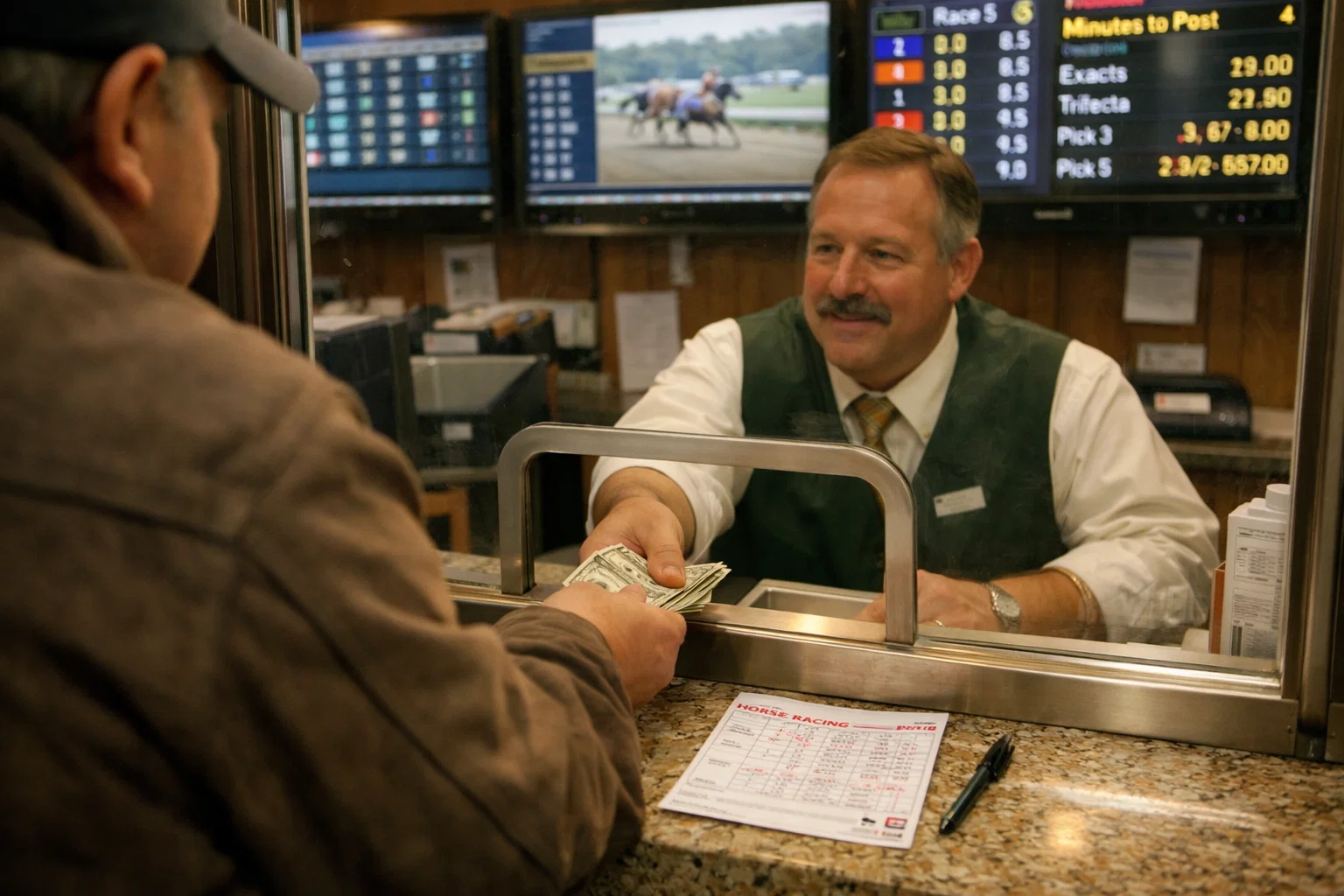
Most online betting platforms display current pool sizes for all available wagers. Before constructing any exotic ticket, check the pool totals for exacta, trifecta, and superfecta. Compare these figures to the ranges discussed above and calibrate your ticket size accordingly. A race showing a trifecta pool already at $100,000 with thirty minutes until post will likely reach $150,000 or more by race time, justifying more aggressive coverage than a race showing only $20,000 in the trifecta pool.
Will-pay tables displayed at tracks and on betting platforms show the probable payout for specific combinations based on current pool composition. These tables reveal which combinations are under-bet relative to others, potentially highlighting value opportunities. If your handicapping points to a combination showing a $500 will-pay while similar combinations show $150, the market is undervaluing your selection, and a larger bet is warranted.
Track your results separately for large-pool and small-pool situations. Over time, the data will reveal whether your box constructions are appropriately scaled to pool conditions. Many bettors discover they over-bet small pools and under-bet large pools, leaving value on the table at major venues while bleeding money at minor tracks. The evidence from your own betting history provides the best guide for future adjustment.
Pool awareness elevates exotic betting from pure gambling to strategic investment. The size of the betting pool determines whether your boxes have positive or negative expected value independent of your handicapping accuracy. Even perfect handicapping cannot overcome the payout compression of small pools when ticket costs exceed rational bounds. Conversely, mediocre handicapping can still produce profits when large pools reward coverage with payouts that meaningfully exceed ticket costs. Let pool size guide your investment levels, and you will find that your exotic results improve without any change to your selection process.
Review our accurate live odds analysis.
