
Bankroll Management for Box Bettors
 Available in US
Box betting amplifies both the potential rewards and the financial risks of exotic wagering. A four-horse trifecta box costs $24, a five-horse box runs $60, and a six-horse box demands $120. These escalating costs can drain a bankroll faster than straight win betting if proper money management principles are not applied. Yet the same cost structure creates opportunities for substantial returns that justify dedicated bankroll allocation when approached with discipline and restraint.
Trust the winning math of bookmakers-bet.
The fundamental principle of bankroll management for exotic bettors differs from straight betting because the hit rate is dramatically lower while the average winning payout is correspondingly higher. A competent handicapper might cash 30% of win bets but only 5-10% of trifecta boxes. This lower frequency demands a bankroll structure that can absorb extended losing streaks without exhausting your betting capital. Running out of money before your next winner arrives is the most common failure mode for exotic bettors who underestimate the variance inherent in these wagers.
Successful box bettors treat their exotic play as a distinct investment category with its own rules and budget. They separate exotic funds from straight betting funds and from general living expenses. This psychological and practical segregation prevents the desperate chasing that occurs when losing streaks threaten money needed for other purposes. When your exotic bankroll exists in isolation, you can absorb the inevitable dry spells without the emotional pressure that leads to poor decision-making.
Table of Contents
Establishing Your Exotic Bankroll
The starting point for any bankroll management system is determining how much money you can genuinely afford to allocate to exotic betting. This amount should represent disposable entertainment funds that you could lose entirely without affecting your financial stability or emotional wellbeing. Most professional guidance suggests your gambling bankroll should never exceed money you would otherwise spend on discretionary entertainment like dining out, concerts, or vacations.
For dedicated exotic bettors, a reasonable starting bankroll might range from $500 to $2,000 depending on personal circumstances. This initial stake should be sufficient to withstand a significant losing streak while still allowing meaningful bet sizes on attractive opportunities. A $500 bankroll divided into twenty-five $20 average bets provides enough runway to absorb a typical cold stretch. A $2,000 bankroll offers even more cushion, allowing for fifty $40 average bets before requiring reassessment.
The 1-3% rule provides a useful framework for individual bet sizing relative to your bankroll. Under this guideline, no single exotic ticket should exceed 3% of your total exotic bankroll, with 1-2% representing the sweet spot for most situations. On a $1,000 bankroll, this translates to a maximum of $30 per exotic ticket, with $10-20 being the preferred range. This constraint prevents any single loss from materially damaging your bankroll while allowing for meaningful investment when your handicapping identifies genuine opportunities.
Some practitioners allocate a fixed weekly or monthly exotic budget rather than sizing individual bets as a bankroll percentage. A $200 weekly allocation, for example, must cover all exotic plays for that period regardless of how many attractive opportunities arise. This approach forces selectivity by creating scarcity: you cannot play every race with a box when your weekly budget limits total action. The discipline of operating within a fixed allocation often improves handicapping quality because every dollar carries weight.
Bet Sizing by Box Type
Different box structures require different sizing strategies based on cost and expected hit rate. Exacta boxes represent the most accessible exotic wager, with a three-horse box costing just $12 at the $2 minimum. These modest costs allow for more frequent play without threatening the bankroll. A $1,000 bankroll might reasonably support $24-36 exacta boxes throughout a racing day without exceeding prudent risk parameters.
Trifecta boxes escalate quickly in cost and should be sized more conservatively. A four-horse trifecta box at $24 and a five-horse box at $60 represent substantial commitments that demand high conviction. Many successful exotic bettors limit themselves to one or two trifecta boxes per day, reserving these plays for races where their handicapping has generated strong opinions. Playing trifecta boxes on every race is a recipe for bankroll destruction regardless of handicapping skill.
Superfecta boxes, even at the ten-cent minimum, require careful sizing because the combination counts multiply so rapidly. A five-horse superfecta box costs $12 at ten cents, which seems manageable, but a six-horse box jumps to $36 and a seven-horse box reaches $84. The superfecta’s difficulty in hitting, typically 2-3% for skilled handicappers, demands that bet sizes remain modest relative to bankroll. Treating superfectas as lottery plays with entertainment value rather than core profit generators is psychologically healthier than expecting regular cashes.
Multi-race exotics like Pick 3, Pick 4, and Pick 6 wagers introduce additional complexity because ticket costs multiply across legs. A Pick 4 using three horses per leg costs $81 at the base rate, a substantial commitment that should represent a small percentage of even a healthy bankroll. Professional multi-race bettors often construct multiple tickets at different price points: a primary ticket for $50-75, a secondary ticket for $20-30, and perhaps a longshot bomb for $10-15. This diversified approach balances coverage with cost control.
Explore the highly effective pick 4 strategy.
Managing Volatility
Exotic betting inherently produces more volatile results than straight wagering. A winning month might return 200% of your bankroll while a losing month might consume 30-40%. This roller coaster is a feature of the bet type, not a bug in your approach. Expecting and planning for this volatility prevents the emotional overreaction that destroys bankrolls.
Drawdown limits protect against catastrophic losing streaks. Many successful exotic bettors establish a maximum acceptable drawdown, typically 30-50% of the starting bankroll, at which point they pause exotic play until confidence returns or the bankroll is replenished. If your $1,000 exotic bankroll drops to $600, stepping back to reassess your approach is wiser than pressing forward hoping to recover quickly. The desperate chase rarely ends well.
Winning streaks require their own discipline. When your bankroll doubles or triples from a successful exotic run, the temptation to increase bet sizes proportionally can be strong. Resist the urge to dramatically escalate. Instead, consider withdrawing some profits to lock in gains while continuing to play at moderate levels. A $1,000 bankroll that grows to $3,000 might sensibly see $1,000 withdrawn for other purposes, with the remaining $2,000 supporting slightly larger bet sizes that still respect the 1-3% guideline.
Session limits complement overall bankroll management. Setting a daily loss limit, perhaps 10-15% of your current bankroll, prevents any single bad day from creating unrecoverable damage. When you hit your daily limit, stop betting regardless of how many races remain. The horses will run again tomorrow, and protecting your bankroll for future opportunities matters more than revenge betting on a cold afternoon.
Tracking and Adjustment

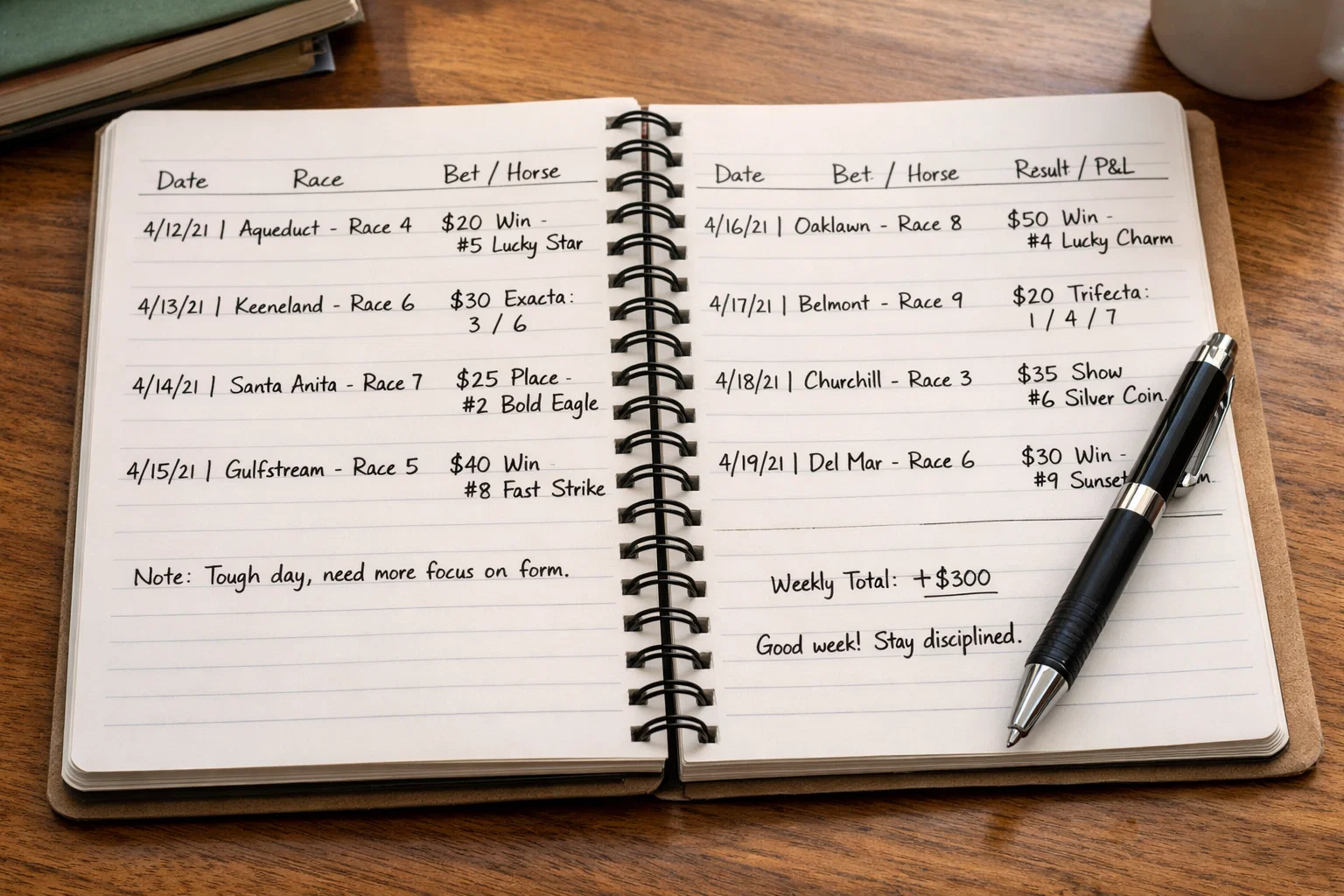
Meticulous record-keeping transforms box betting from gambling into a business activity. Track every exotic bet including the date, track, race, bet type, horses included, cost, result, and payout. Over time, this data reveals patterns that improve future decision-making: perhaps you perform better at certain tracks, with certain bet types, or in certain race classifications.
Review your exotic performance monthly. Calculate your return on investment by dividing net profit or loss by total amount wagered. Exotic bettors who maintain a long-term ROI above break-even, meaning they return more than they bet, are genuinely skilled handicappers. Those consistently losing should either improve their handicapping, reduce their bet sizes, or acknowledge that exotic betting may not be their strength.
Bankroll adjustments should follow performance, not precede it. If your results demonstrate consistent profitability over several months, gradually increasing bet sizes is justified. If your results show persistent losses, reducing bet sizes or taking a break allows you to preserve capital while reassessing your approach. Never increase bet sizes to chase losses or because you feel a winning streak is overdue.
The goal of bankroll management is survival first and profit second. An exotic bettor who preserves their bankroll through cold stretches remains positioned to capitalize when handicapping insights align with favorable race conditions. The bettor who exhausts their bankroll during a drought never gets the opportunity to enjoy the inevitable hot streak that follows. Patience, discipline, and respect for the mathematical realities of exotic betting are the foundations of long-term success.
